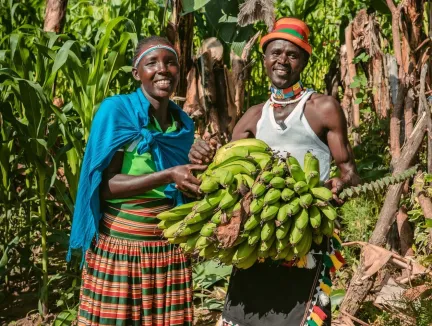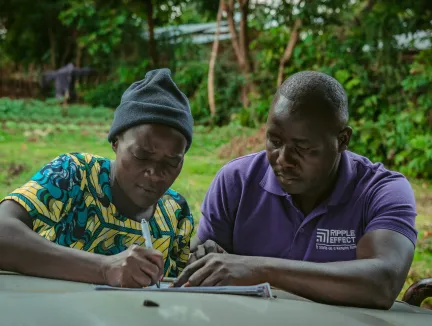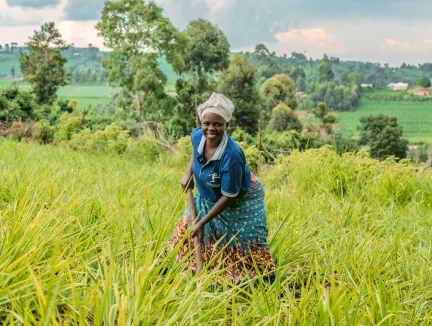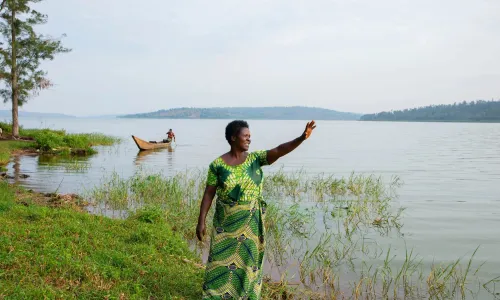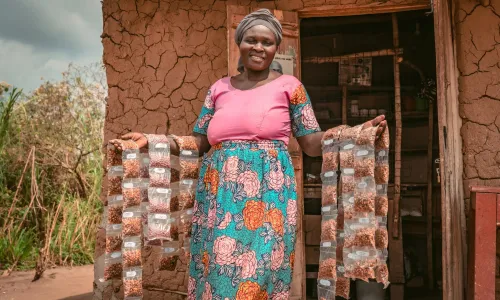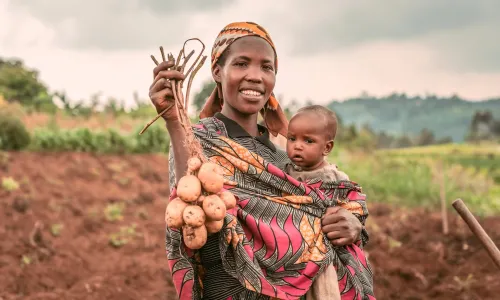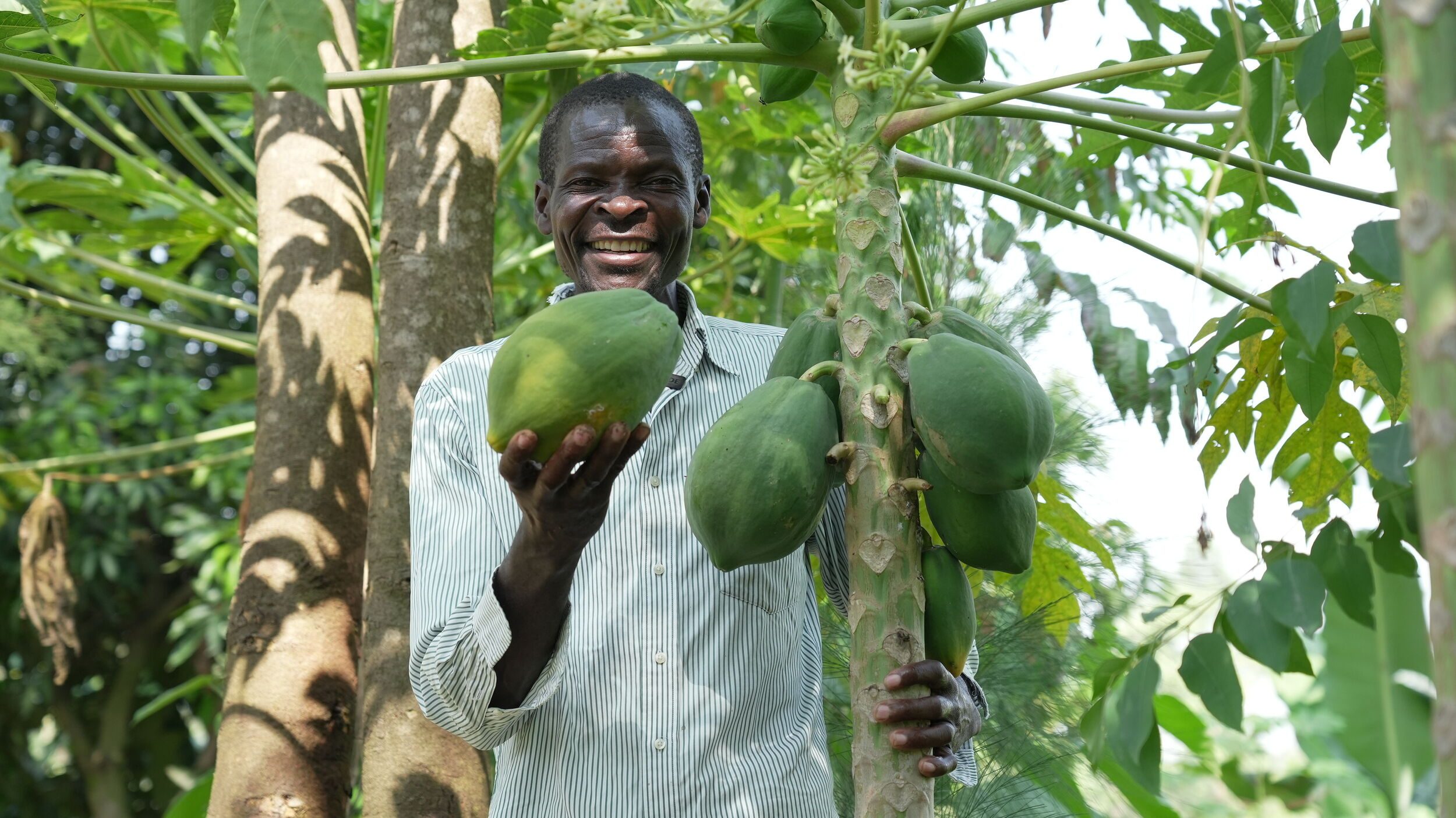
Farmers build climate-resilient farms by putting proven agroecological practices into action. Training focuses on improving soil fertility, conserving water, diversifying crops, integrating livestock, and making small changes with existing resources to strengthen farm productivity in the face of unpredictable seasons and climate shocks.
Practical methods include mulching and cover cropping to retain moisture in the soil, and planting trees and woodlots to protect soils and strengthen the wider farm environment during floods.
Crop rotation, and compost and manure production help maintain soil fertility and reduce degradation, while drought-resistant seeds and seedlings distributed to project participants give families more resilient options for growing vegetables and other food crops.