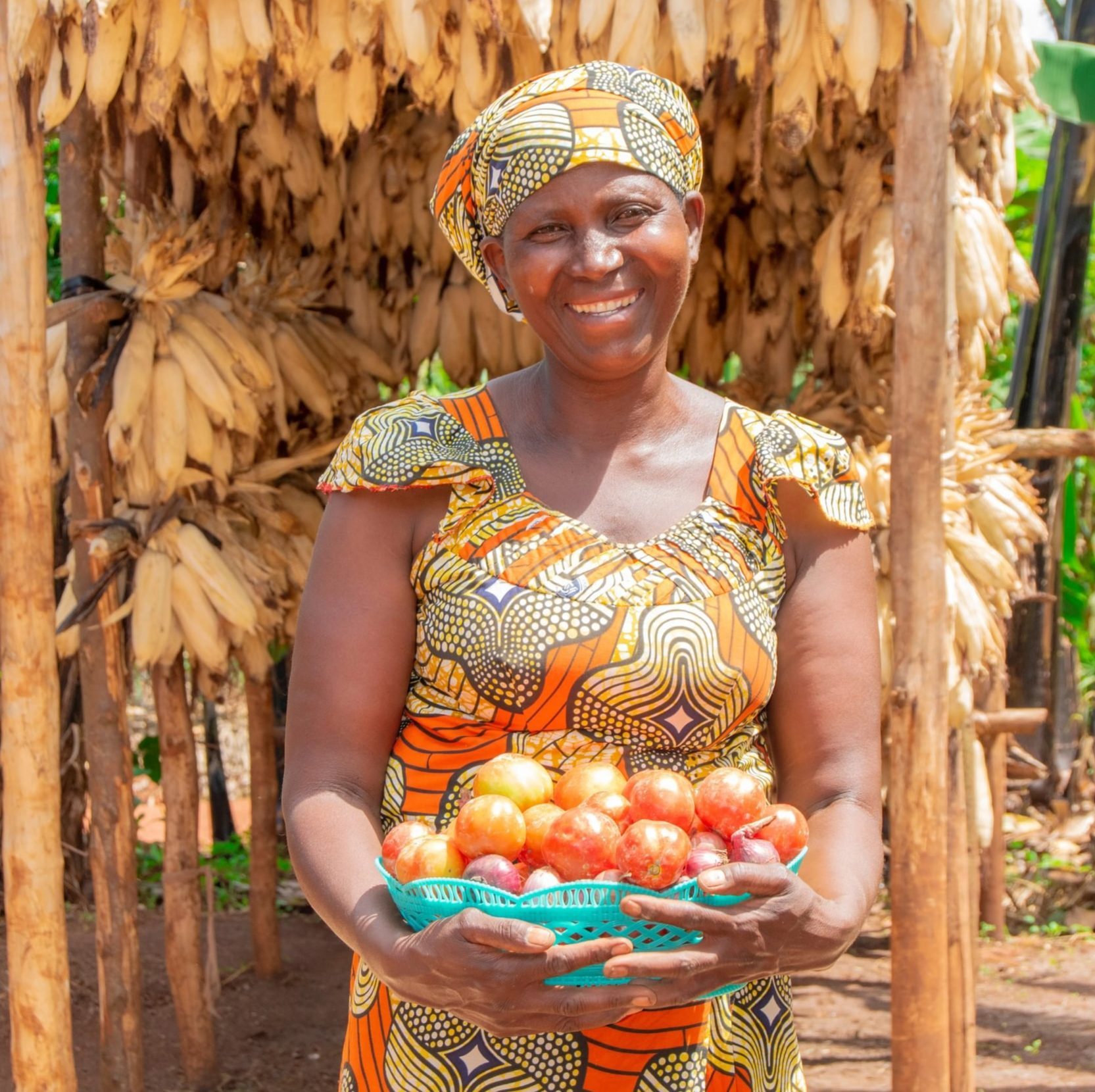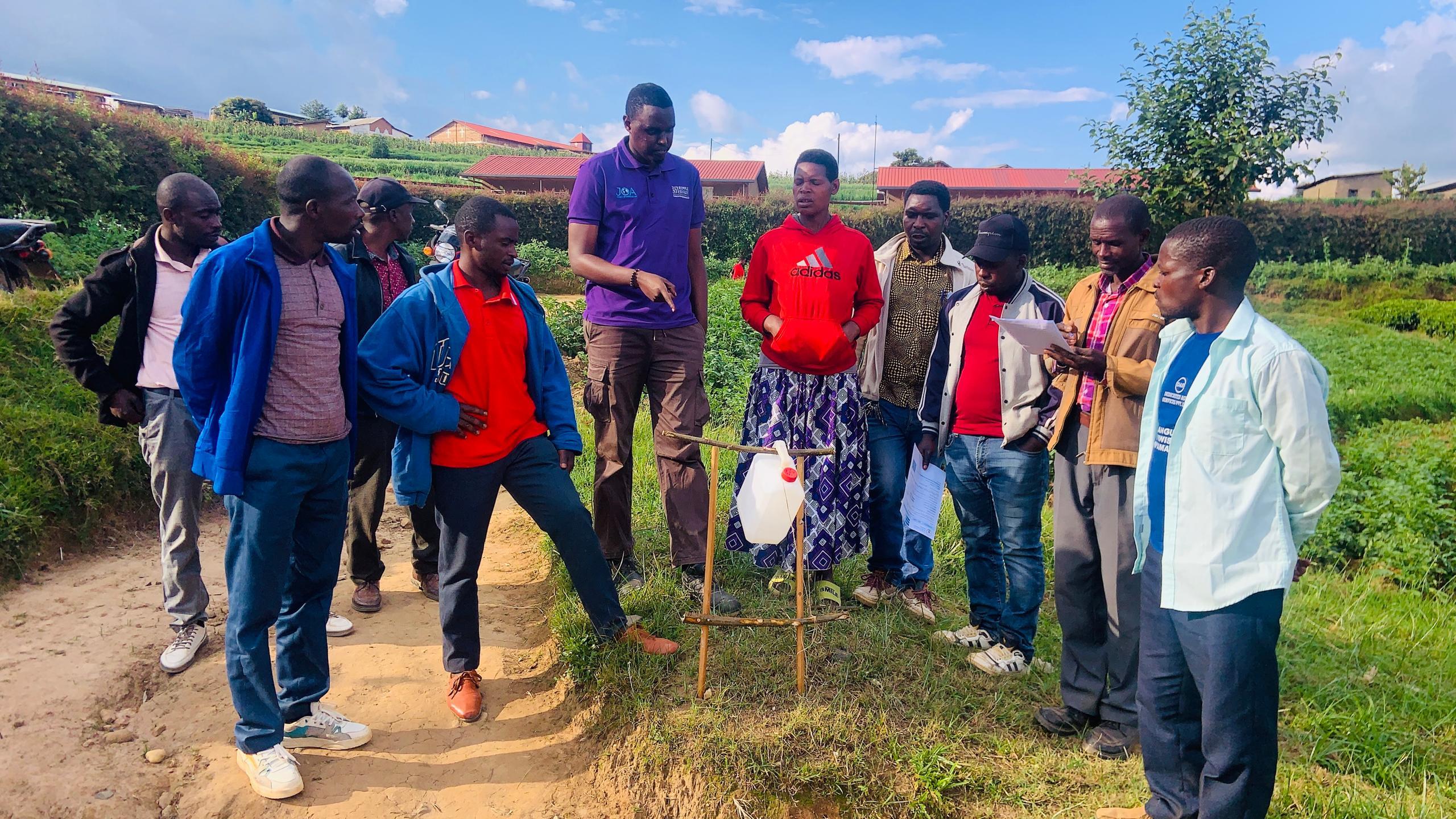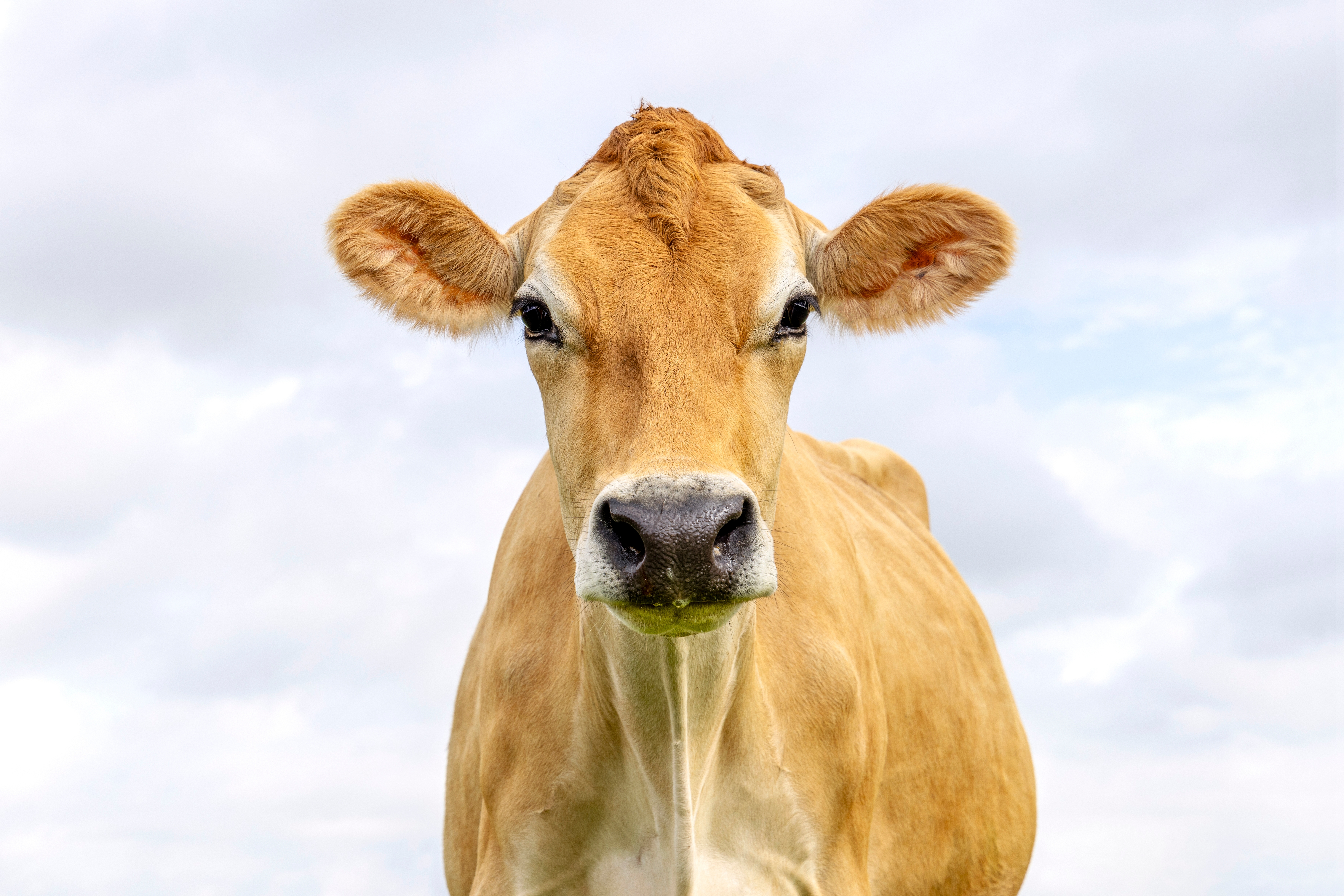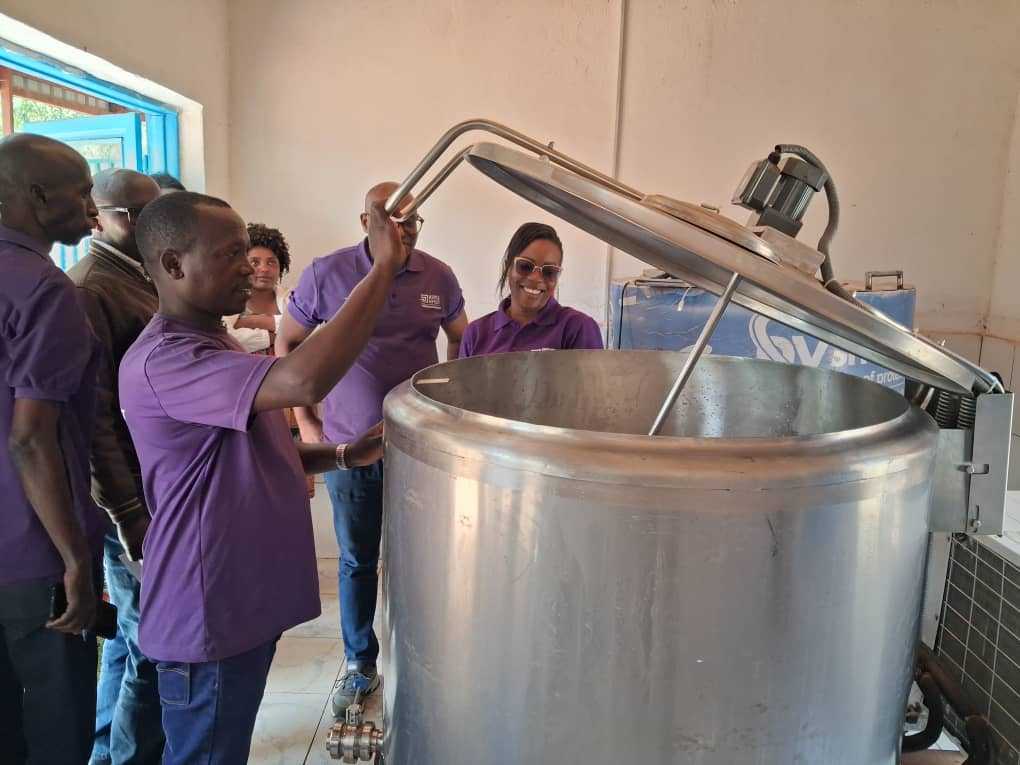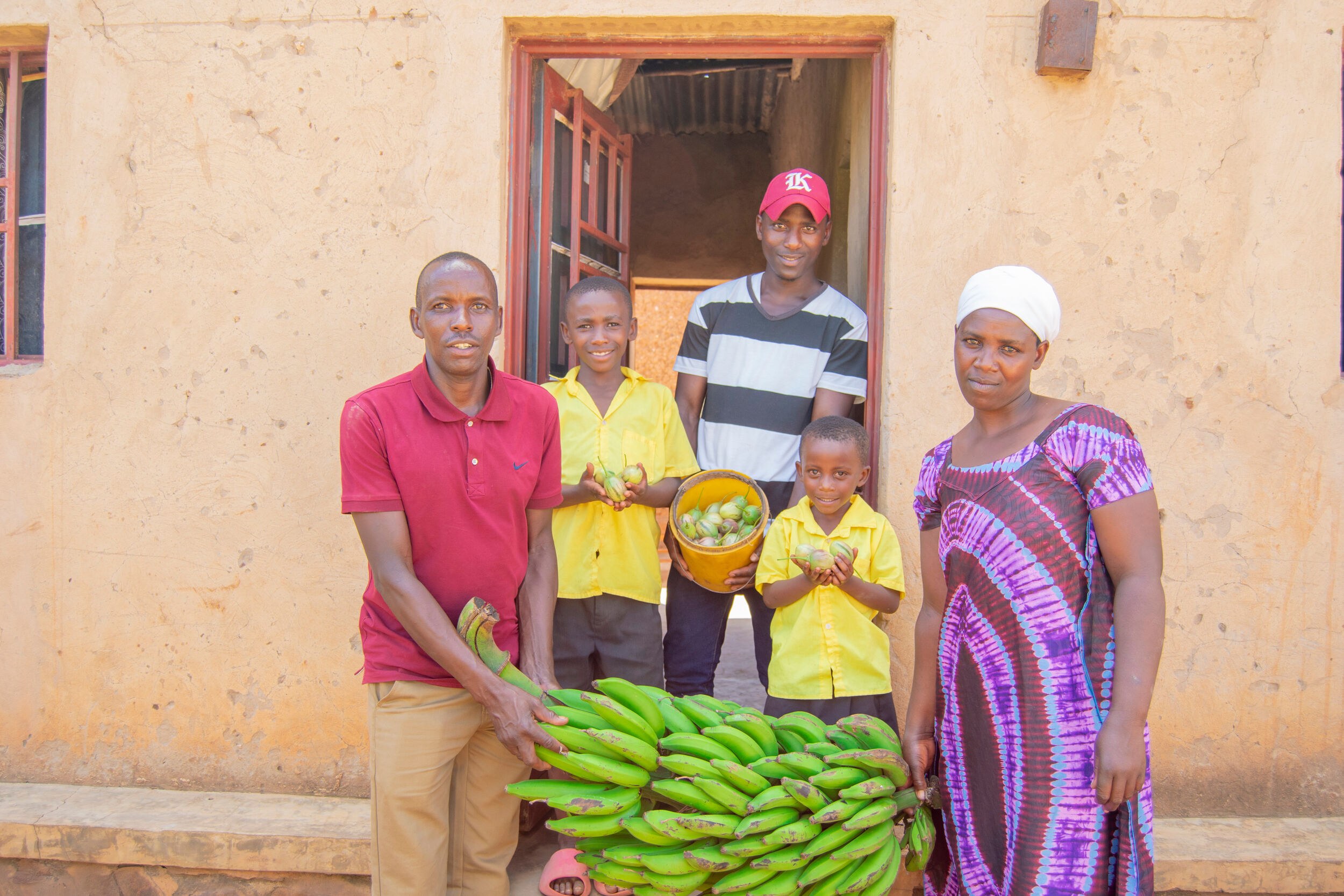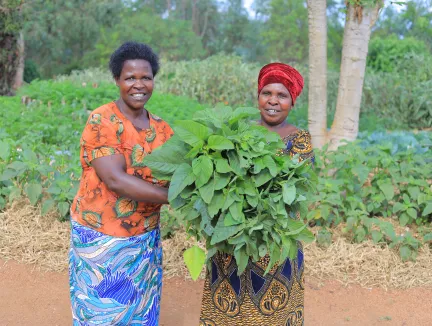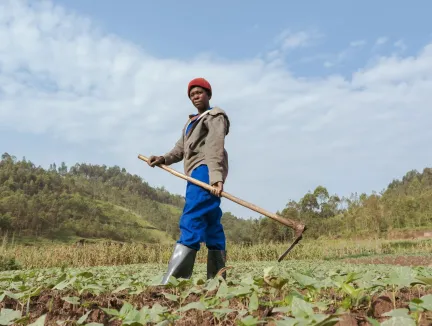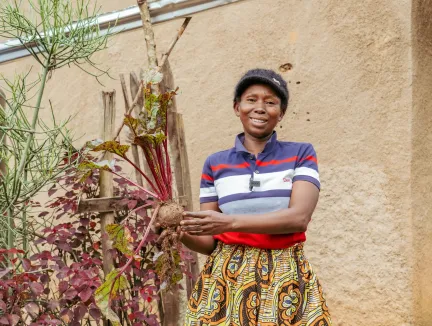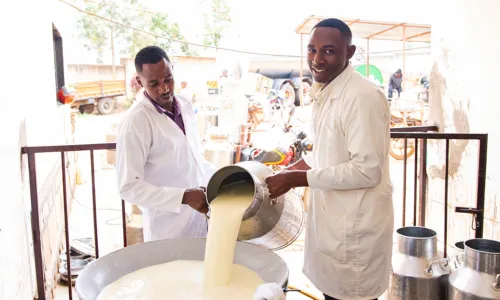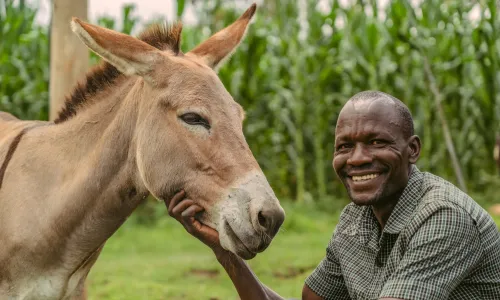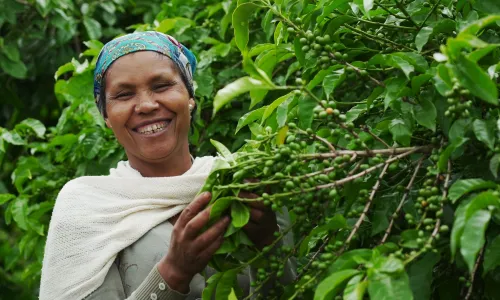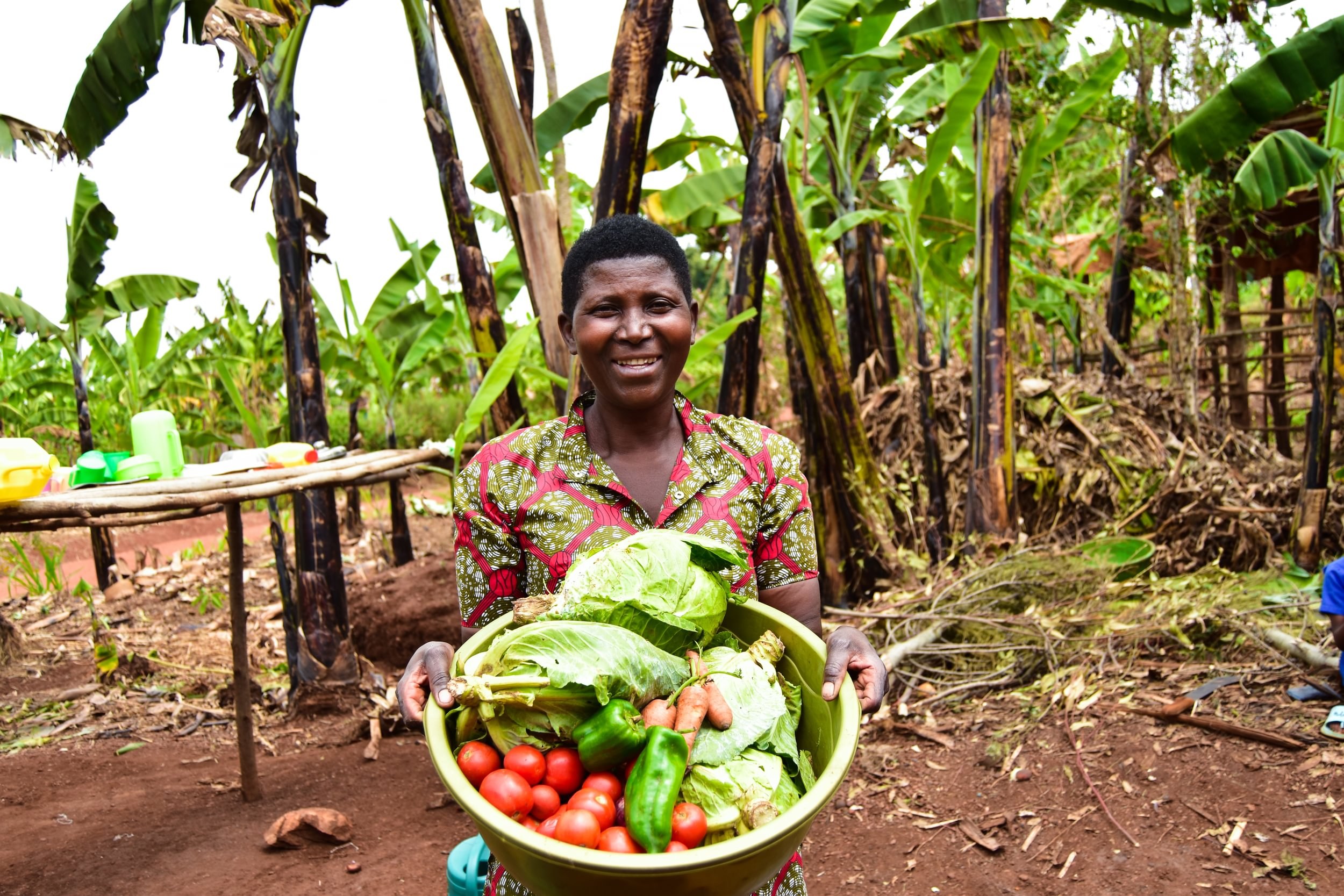
Through Inka Nziza Zikamwa II, farmers join practical training in climate-smart agriculture, integrated crop-livestock farming and improved animal husbandry, in which they develop the skills to improve farm productivity while protecting the environment. They learn how to provide balanced nutrition for their dairy cows, improve animal health and reproduction, grow high-yielding fodder crops, and conserve feed for the dry season. Families also learn to grow vegetables and fruit, plant fodder, fruit and agroforestry trees, and improve soil fertility through composting and the use of organic manure.
Sustainable practices such as rainwater harvesting and natural pest management help protect the environment while making farms more resilient to climate change. Community tree nurseries, fodder multiplication plots and rehabilitated water sources provide lasting resources that benefit both livestock and households. Community animal health workers and peer farmer trainers provide ongoing technical support, helping more local families adopt and sustain improved farming practices, spreading change throughout communities.