Back

Happy Donkeys for Resilient Families

Location: Migori County, Kenya
Duration: January 2026 - November 2027

This project works with over 600 donkey-owning families in Kenya to improve donkey health and welfare while strengthening household resilience through better access to animal health services, climate adaptation practices, savings and financial support.

Our approach

The project brings donkey owners together to learn and share experiences, aiming to improve donkey welfare, and subsequently, support smallholder farmers with building financial security and resilience.

The project helps donkey-owning families build practical knowledge and skills to improve the health and welfare of these working animals. Farmers and donkey keepers take part in sensitisation and training on the five domains of animal welfare, learning about appropriate handling, feeding, harnessing, workload and other aspects of everyday donkey care. Donkey clinics provide communities with access to animal health support, while animal health service providers and agro-dealers receive mentorship to strengthen the quality of services available locally.

Local donkey welfare champions also play an important role in sharing knowledge with other farmers, helping good practices spread through the community. Fodder production is promoted so families can provide donkeys with more reliable sources of nutritious feed, including through the distribution and propagation of Siambasa grass.
“Looking after donkeys is about more than animal welfare. Donkeys are closely connected to the families and environments they support, so when we improve their health and care, we also strengthen household wellbeing and resilience. This is the One Health approach in action: recognising that the health of people, animals and the environment are all connected.” - Meshark Sikuku, Sustainable Agriculture Coordinator

Climate pressures make it increasingly important for families to carefully manage the natural resources they rely on. This project supports households to adopt agroecology approaches that strengthen their resilience while improving access to resources for their animals.

Farmers learn about water conservation, helping households make better use of available water throughout the year and to build resilience to longer dry seasons. The project also promotes agroecological technologies and fodder production, including Siambasa grass, so families can grow more of the feed they need rather than relying entirely on what is available naturally.

These activities benefit the wider farm as well as donkeys. Growing fodder alongside food and other crops can contribute to more productive use of land and strengthen household food security, while improved resource management helps families prepare for changing conditions.

The project brings these ideas together through a One Health perspective. Healthier animals, more resilient farms and better management of natural resources all contribute to stronger households and communities.

The project makes sure that women, young people and people with disabilities have equal opportunities to participate in project activities and benefit now, and in the future, from the changes taking place in their communities.

Women are supported to strengthen their involvement in economic activities, including the production of African leafy vegetables and food security crops, while improved access to finance creates further opportunities to invest and earn.


The project uses Ripple Effect's Transformative Household Methodology (THM) to help families look at how decisions and responsibilities are shared within the household. This encourages greater participation in planning and economic decision-making, while creating space for family members to consider how they can work together towards their goals.

Families are supported to strengthen their financial resilience so they are better able to meet household needs and invest in their livelihoods. Savings and loan groups provide a practical way for community members to build financial security together and access funds when they need them.

Through Village Savings and Loan Associations (VSLAs), participants develop the confidence and skills to save regularly and access small loans for household needs or income-generating activities. Enterprise development activities help families explore opportunities that can diversify their sources of income, reducing reliance on a single livelihood activity.

These activities connect closely with donkey welfare. For families that depend on donkeys for their livelihoods, greater financial resilience can make it easier to invest in healthcare and better equipment for their animals. In return, donkeys will be in better shape to transport goods to market.

The project recognises that improving donkey welfare requires change beyond individual households. It therefore strengthens the local systems and services that support donkey-owning communities, while encouraging greater recognition of donkeys in wider development and planning.

Animal health service providers and agro-dealers receive mentorship to build their knowledge and improve the quality of advice and services available to donkey owners. Community-based champions and Peer Farmer Trainers also help connect families with information and support, creating a network of local knowledge that can continue to benefit communities.

At a wider level, the project engages policy makers and other stakeholders to raise the profile of donkey welfare. Donkeys play an important role in the lives and livelihoods of many rural families, but they are not always considered alongside other livestock in development programmes, disaster preparedness or emergency planning.

By working with the County Government of Migori and other stakeholders, the project promotes greater consideration of donkey welfare within local systems and policies, helping create conditions for longer-term change beyond the life of the project.

"My perspectives have drastically changed. I have set aside land for planting fodder for the donkey, I have improved the harnessing material, named the donkey Osama and I handle him in a gentle way. He now works well without being beaten and I am handling him in a humane manner."

- Rose, project participant

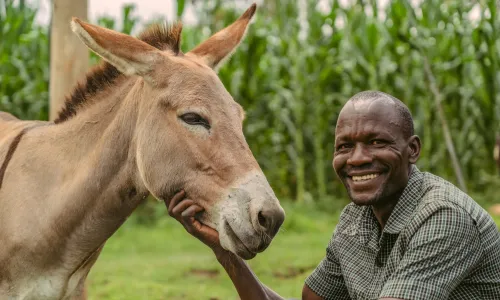
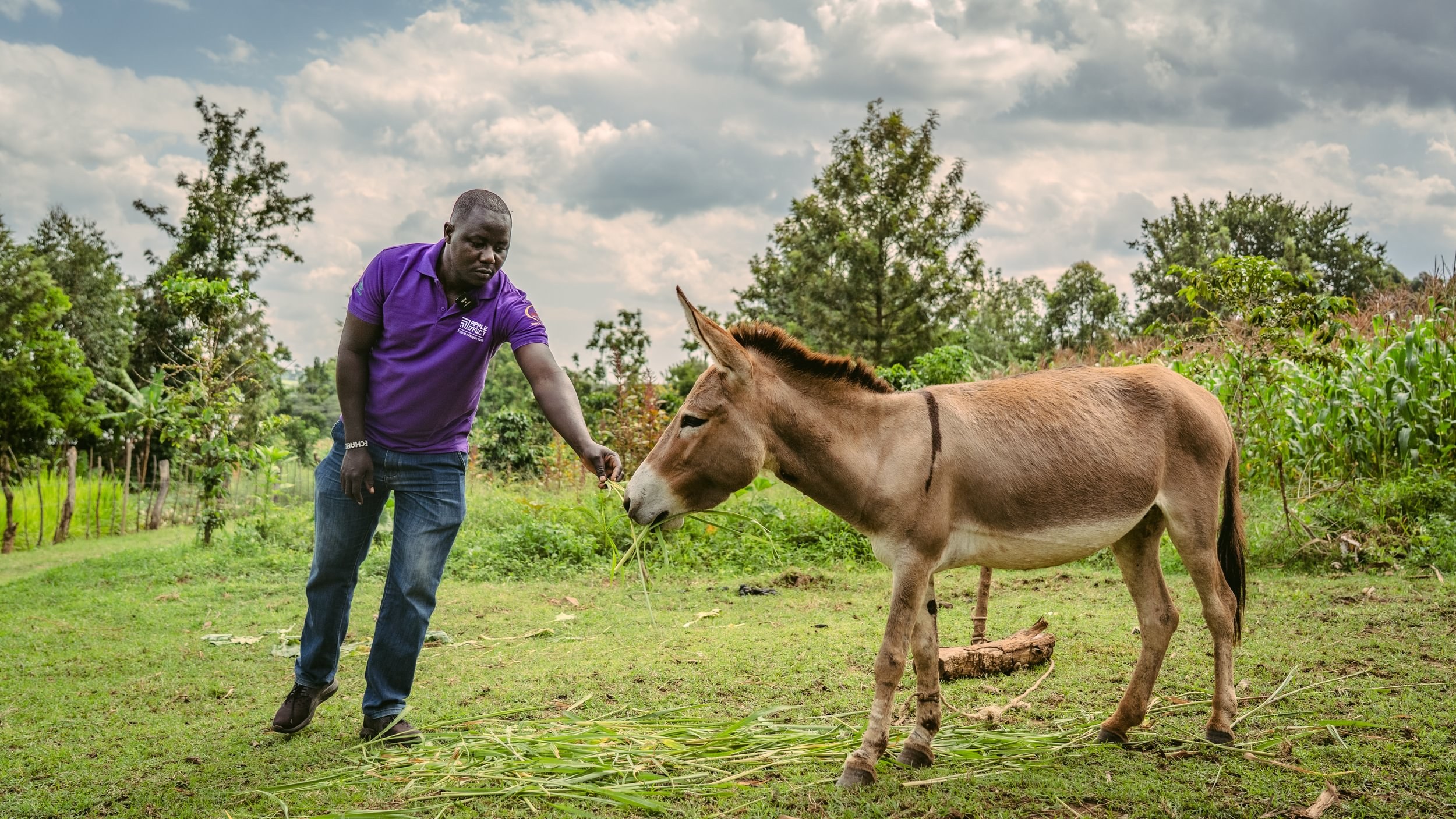
(Pictured is an Animal Health Service Provider with a donkey)

Funding partner

The Donkey Sanctuary Kenya

The Donkey Sanctuary is a global charity dedicated to improving the welfare of donkeys and mules. Founded in the UK in 1969, it works with communities, governments and partner organisations around the world to improve the lives of working donkeys, while promoting better understanding, care and protection for these animals.

How you can get involved

Thank you to all supporters, partners, and staff who make this and other projects possible. Change starts with your support.

You can learn more about our work in this area, or take action and support our mission.

Make a donation

Donate

Make a donation

Donate

Partner with us

Explore partnerships

Partner with us

Explore partnerships

Learn about our impact

View our impact

Learn about our impact

View our impact
Sign up to hear more

Want to hear good news stories from Africa, get involved in fantastic fundraising and be part of exciting events? Fill out your details below and we will keep you updated by email.

Name *

* Required information.

By providing your email address above, you are confirming that you are happy for Ripple Effect to contact you by email. We will use your email to let you know about news, events, fundraising and appeals. We will never sell or trade your details. Read more about how we value your privacy. You can unsubscribe at any time by emailing info@rippleeffect.org or by clicking the unsubscribe link in any email we send.

Are you in the right place?

If you are in the US you might be interested in the US site, if so please click the link below.