

Our climate work
The climate crisis: a reality that must be faced
The climate crisis is already changing the way farming families across East Africa grow food and earn their income. Unpredictable rainfall, prolonged droughts and flooding can disrupt growing seasons, damaging crops and placing greater pressure on essential resources like food and water.
For families whose livelihoods depend on the land, climate resilience is key. And it is connected to everything from soil health to water availability, crop diversity, livestock and income.
With farmers in rural Africa amongst the most affected by the climate crisis, it is essential that work to adapt, mitigate and build resilience to changing climates is integrated across all our programmes. This enables the families we work to face reality with confidence and a plan, making their progress sustainable despite our projects ending, and continuing to teach environmental care to future generations.
Building climate-resilient farms
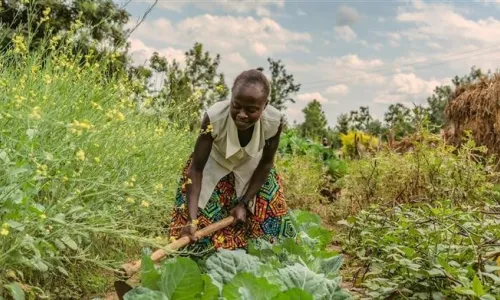
Our climate work is closely connected to our agroecology approach, farming in a way that works with nature rather than against it.
Around 90-95% of food production in Africa is rainfed, making farming particularly vulnerable to changes in rainfall.
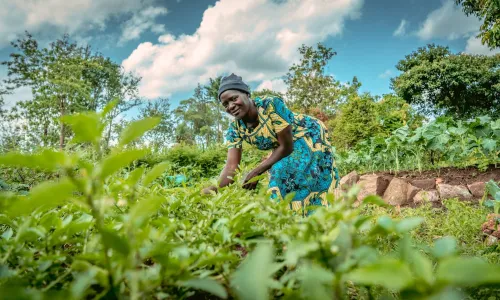
We work alongside rural smallholder farmers to build farming systems that are better able to cope with increasingly unpredictable growing seasons and extreme weather conditions like drought and heavy rainfall.
Depending on the local environment and the needs of each farm, this can include:
- Improving soil fertility and moisture retention through compost and mulching
- Growing diverse crops suited to local conditions
- Harvesting and managing water more effectively
- Integrating trees into farms through agroforestry
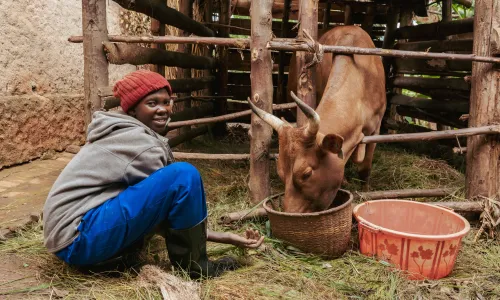
- Strengthening integrated livestock management
- Protecting biodiversity and reducing reliance on synthetic inputs
These practices do more than respond to one climate shock. Together, they help strengthen the whole farming system, supporting long-term resilience that grows food security and incomes.

People, animals and the environment are connected
Environmental sustainability is also closely connected to the health and wellbeing of farming families and animals.
Healthy soil supports crops. Crops provide food and income. Healthy livestock provide manure and additional income. Clean water supports people, animals and farms.
When one part of this system is weakened, the effects can spread across the rest.
That is why our One Health approach recognises the connection between human health, animal health and environmental health. All three must be considered together when thinking about climate solutions, so that farming families can build stronger and healthier systems for the future.
Taking responsibility for our own environmental impact
Our responsibility does not stop with the communities we work alongside.
Ripple Effect has an Environmental Policy and conducts regular environmental reviews, including an annual audit of our organisational carbon footprint. Working with sustainability consultancy mdsustain, we measure emissions associated with our operations across our offices. This includes fuel and electricity use, vehicles, purchased goods and services, waste, water and business travel.
Measuring our footprint helps us understand where our environmental impact comes from and where improvements can be made.
Our carbon footprint
Our assessments show that Ripple Effect's recorded operational carbon footprint has decreased across the three completed reporting periods:

Our carbon footprint measurement continues to develop. Improving the quality and completeness of the data we collect will help us build a clearer picture of our impact and identify where further action is needed.
Meshark Sikuku, Farm Systems and Sustainability Coordinator at Ripple Effect
Climate justice and farmers' voices
Climate change does not affect everyone equally.
Farming communities across sub-Saharan Africa are among those facing its impacts the most, while having contributed far less to the climate crisis than many other parts of the world.
We believe the people experiencing these changes must have a voice in shaping the solutions.
Our work supports farming communities to build knowledge and confidence, share what works and speak out about the issues affecting their farms, natural resources and livelihoods.
How you can support our climate work
Your support helps farming families build more resilient livelihoods and protect the natural resources they depend on despite unpredictable climates.
Learn more about our approach and how you can get involved:


Want to hear good news stories from Africa, get involved in fantastic fundraising and be part of exciting events? Fill out your details below and we will keep you updated by email.