

Farming in the face of the climate crisis: what should farmers grow when the weather can't be trusted?
Approx. 6 min read
By Meshark Sikuku, Sustainable Agriculture Coordinator, and Anna Borsboom, Digital Marketing Manager at Ripple Effect
Across rural eastern Africa, farming families are facing the reality of climate devastation. There aren’t four seasons in Africa as there are in the west – there’s the rain season and the dry season. But the climate crisis is making these seasons more unpredictable, and rural farmers often don’t have access to reliable weather forecasts for their location. They are faced with periods of drought when rain should have come, and heavy rainfall during their typical dry seasons. With this unpredictability becoming the norm, crops that once thrived now struggle. Harvests fail. Families lose both food and income in a matter of months.
For smallholder farmers, the question is becoming more urgent every year:
What should you grow when the weather can no longer be trusted?
At Ripple Effect, we don't believe there is a single miracle crop that can solve hunger or poverty. Instead, we work with farming families to build integrated farm systems where different crops, livestock, trees and farming practices work together, and can offer a safety net among shifting weather patterns.
Diversity: one of a farmer's greatest strengths
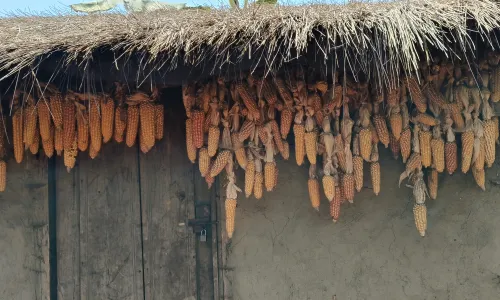
For generations, many farming families in East Africa have relied heavily on staple crops such as maize, and cash crops like coffee, sugarcane, and cotton.
Maize remains an important food source across the region, but depending too heavily on a single crop can leave families vulnerable. If drought, pests or disease affect that crop, an entire season's harvest may be lost.
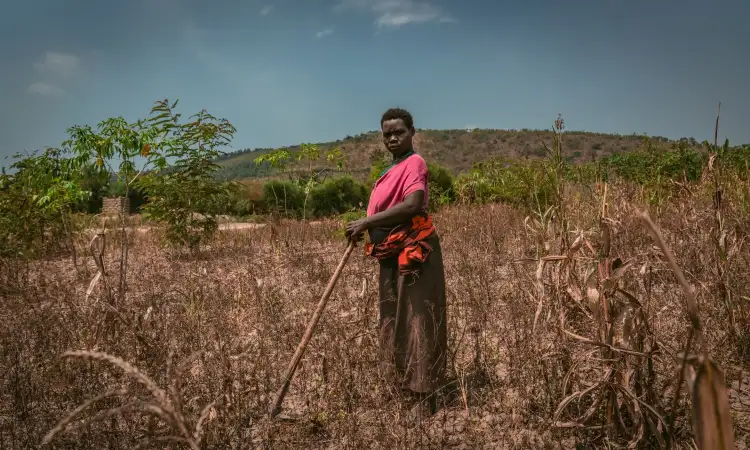
Climate change is making these risks even greater. That's why Ripple Effect promotes agroecological farming systems that encourage diversity rather than dependence.
Instead of relying on one crop to do everything, families grow a range of crops that support one another and provide different benefits throughout the year.
The result is often greater resilience, better nutrition and more reliable livelihoods.
So, what might a climate-smart farm grow?
The soil builder: pulses
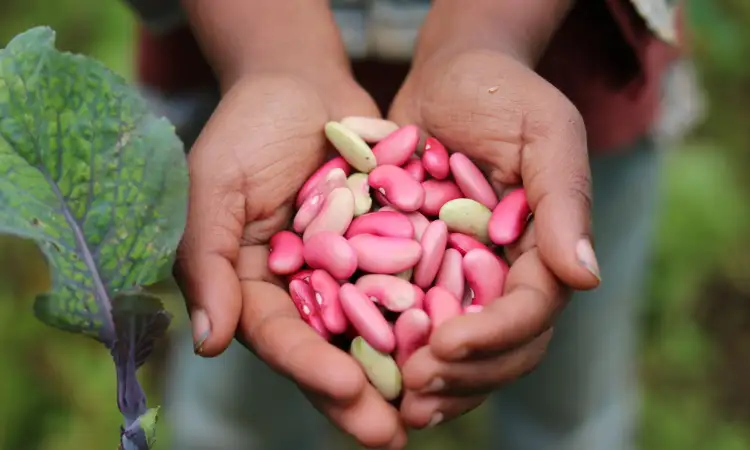
Beans, peas and other pulses are among the most valuable crops many families can grow.
Pulses are rich in protein, making them an important source of nutrition, especially in communities where meat can be expensive or difficult to access regularly.
But their benefits extend far beyond the dinner table.
Unlike many crops, pulses work with nature to improve soil fertility. They help fix nitrogen in the soil and protect soil from erosion, reducing the need for costly inputs and creating healthier conditions for future crops.
This means a family can harvest nutritious food while also improving the productivity of their land. In a climate crisis, crops that support both people and the environment are becoming increasingly important.
The long-term investment: fruit trees
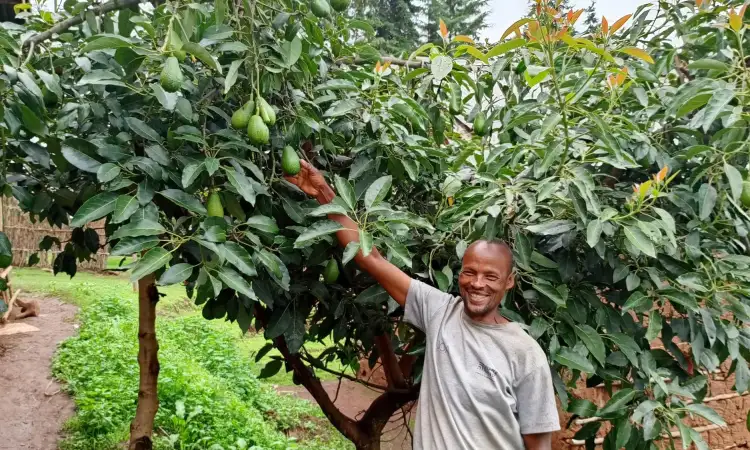
Most crops are planted, harvested and replanted within a year. Trees require a different mindset. When families plant fruit trees, they are investing in the future.
Fruit trees such as mango, avocado and pawpaw can provide nutritious food, generate income through fruit sales and help protect farms from environmental pressures. Their roots help stabilise soil, reducing erosion during heavy rainfall, while their shade can improve growing conditions for other crops.
As climate change places increasing pressure on farming systems, trees become an important part of building resilience. A fruit tree planted today can continue benefiting a family for years to come.
The safety net: drought-tolerant crops
When the rain season is delayed – which may be a matter of months rather than weeks – some crops struggle more than others.
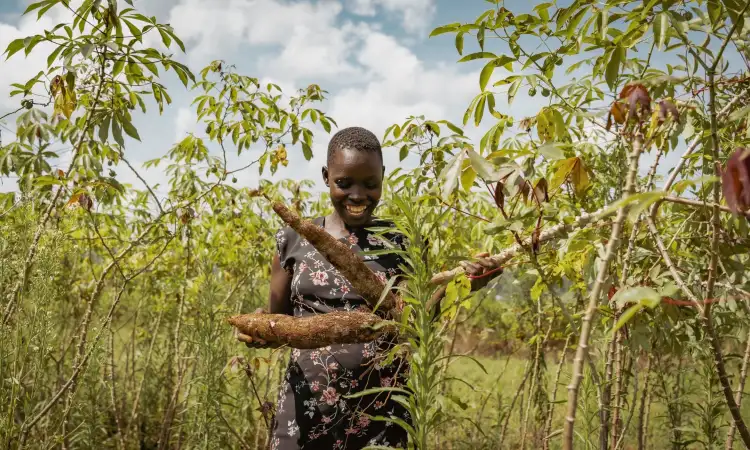
That's why many farming families choose to include drought-tolerant crops such as cassava, pineapple and sweet potato within their farming systems.
Cassava is known for its ability to survive in difficult conditions. While it may not always be the most profitable crop, it can provide a crucial source of food when other harvests are affected by drought.
Pineapple, on the other hand, offers good economic opportunities, and is particularly valuable as climate pressures increase. Pineapples are highly efficient at conserving water. Their thick leaves help reduce moisture loss, allowing them to continue growing in areas where rainfall is becoming less reliable.
Sweet potatoes are naturally hardy and their ability to grow in challenging conditions makes them an important option for families facing increasingly unpredictable weather. Nutritionally, they pack a remarkable punch. Orange-fleshed sweet potatoes are rich in vitamin A, which supports healthy eyesight and immune systems.
For families facing increasingly unpredictable weather, the reliability of these crops matters. Food security is not only about producing enough food during good years. It is also about ensuring families can continue to eat when conditions are challenging.
The everyday heroes: kitchen garden vegetables
Not every climate-smart solution requires a large field; in fact, many of the farmers we work with don’t own an extensive plot of land. Small ‘kitchen gardens’ near home can be more than enough to feed the family and earn an income.
Across East Africa, kitchen gardens are helping families improve nutrition, diversify their diets and earn additional income.
Leafy greens, tomatoes, onions, carrots and other vegetables provide vitamins and minerals that are essential for healthy development and strong immune systems.
When families produce more than they need, surplus vegetables can be sold, creating an additional source of income that can help pay for school fees, healthcare or farm improvements.
What begins as a small garden can become an essential step towards greater resilience and self-reliance.
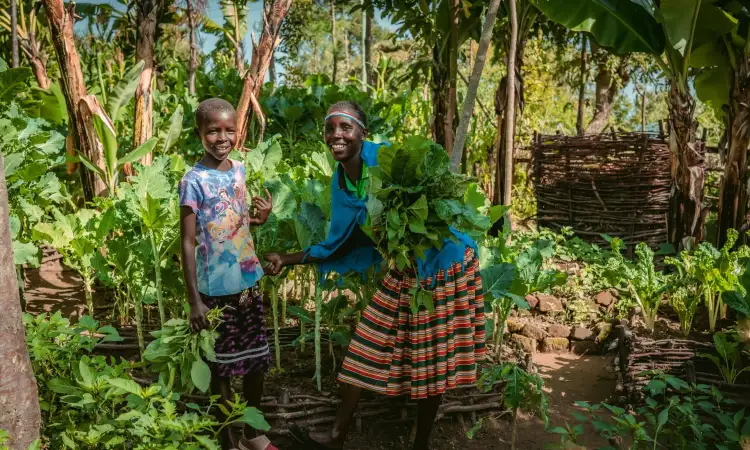
Love growing your own garden? Through Garden Twinning, you can help farming families across eastern Africa access the skills and support they need to grow nutritious food and build resilience to climate change. Twin your garden today.
No crop succeeds alone
While each of these crops offers unique benefits, lasting transformation comes from how farms function as a whole.
A productive kitchen garden depends on healthy soil.
Healthy soil can be improved through composting and organic manure.
Trees help protect that soil from erosion.
Livestock provides manure that enriches the land.
Savings groups help families invest in new opportunities.
Knowledge shared between neighbours helps successful practices spread throughout communities.
Every part of the system strengthens the others.

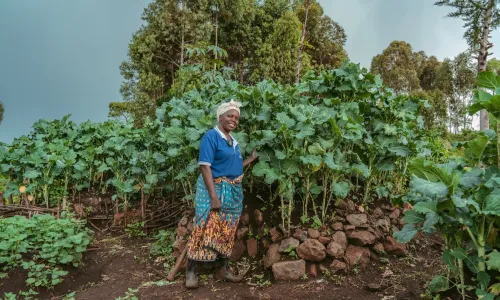
"Ripple Effect's integrated farm systems methodology is unique, connecting people, land, resources, communities and the environment. I haven't seen this approach in other organisations."
This interconnected approach helps families adapt to the climate crisis while improving food security, incomes, health and environmental sustainability.
From your garden to theirs
Whether you're growing tomatoes in a raised bed, herbs on a windowsill or flowers in a border, every garden starts with a simple decision: what to plant.
Through Garden Twinning, you're helping farming families access the training, skills and support they need to make those choices with confidence.
With your support, more families will learn how to improve soil health, grow a greater variety of crops, adapt to changing weather patterns and build farms that are more resilient to climate shocks.
The impact goes far beyond a single harvest, or a small number of families. We have seen many times how participants become proud of their progress and share their knowledge with neighbours, so transformation can spread throughout an entire community.
That's why we call it a ripple effect.
Small actions by farmers, repeated over time, can create lasting change.
And just as every thriving garden begins with a seed, every resilient farming system begins with the opportunity to grow.
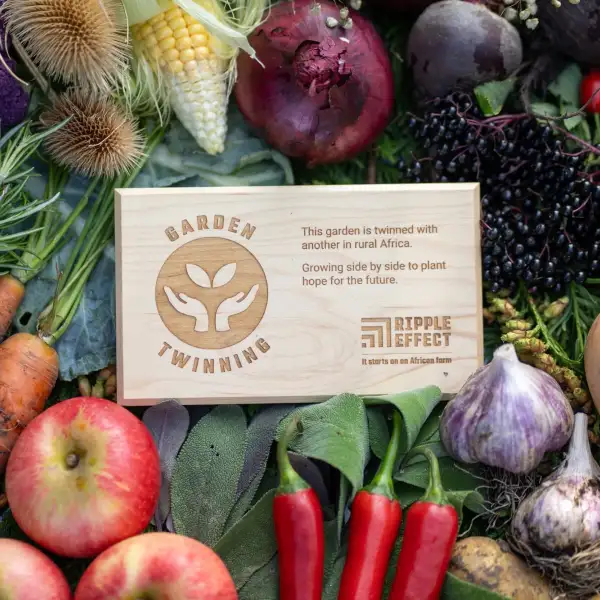
Join hundreds of garden twinners today to start your own ripple of change, and receive a plaque to display in your garden as a symbol of your support. You will also receive gardening information that may add to your own planting journey!
Want to hear good news stories from Africa, get involved in fantastic fundraising and be part of exciting events? Fill out your details below and we will keep you updated by email.