

About the Farming for the Future Fund
Supporting farming families with climate-smart skills as seasons become more unpredictable.
The Farming for the Future Fund helps communities in rural Africa protect their land, grow diverse crops for nutritious diets, and build resilient and secure futures.
Investing in this fund is a five-year commitment to 2030, helping Ripple Effect strengthen what already works, test new ideas, and share successful approaches with more farmers.
Climate change threatens smallholder farming in East Africa
Across sub-Saharan Africa, more than 60% of people rely on smallholder farming for food and income. The climate crisis is making farming seasons more unpredictable, threatening food security and rural livelihoods.
For farming families in East Africa, poverty goes beyond low income. Droughts and floods can lead to crop losses, hunger, children missing school, and limited access to essentials like healthcare, safe water and education.

Despite these challenges, smallholder farmers continue to adapt, innovate and protect their land. The Farming for the Future Fund strengthens this resilience by supporting climate-smart, sustainable agriculture and sharing effective, locally led farming practices with thousands more farmers.
What this fund supports
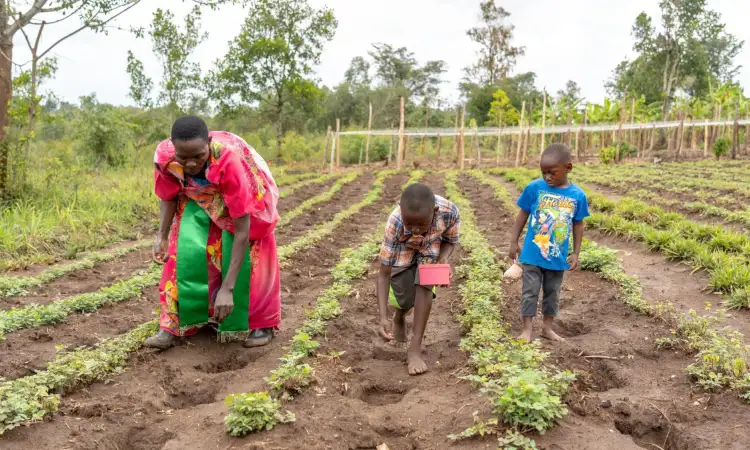
The Farming for the Future Fund works with nature to help smallholder farmers thrive. It supports farmers to:
- Use regenerative farming practices that improve soil health and water retention
- Diversify crops to boost nutrition, food security, and income resilience
- Access quality farming inputs, including seeds, livestock feed, and veterinary services
- Build lasting knowledge that can be passed across the community and down through generations
The fund also allows us to continue scaling proven approaches while testing new innovations to help farmers adapt to a changing climate.
Expected outcomes
By end 2030, the Farming for the Future Fund will help ensure that at least 70% of the farmers we work with are:
- Food secure: eating six or more types of food each day
- Resilient to seasonal shortages: experiencing fewer than two months of hunger per year
- Using climate-positive farming practices: implementing at least three agroecological methods that work with nature to improve yields
- Managing natural resources sustainably: adopting at least three practices, including energy-saving approaches like improved stoves
Support this fund
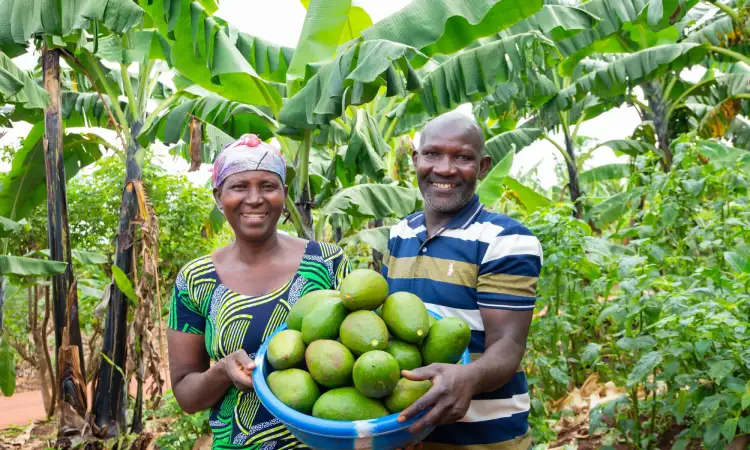
Your contribution to our Farming for the Future Fund will help rural families in Africa strengthen their farms, improve food security, and restore the land for the future.
The Farming for the Future Fund is one of three – you may also be interested in learning more about our Seed & Scale Fund (enterprise development and financial inclusion), and our Equal Roots Fund (gender and social inclusion).
Interested in joining our Farming for the Future giving circle? Supporters giving £5,000 or more to the fund become a member and receive exclusive benefits. To find out more, contact the Partnerships team at partnerships@rippleeffect.org or fill the form below.
FAQ: Farming for the Future fund
The Farming for the Future Fund is a five-year fund running to 2030 that supports smallholder farmers in rural East Africa to farm sustainably and adapt to a changing climate. It helps farmers use regenerative practices, grow more diverse crops, build lasting knowledge in their communities, and access quality farming inputs. It also allows Ripple Effect to test new innovations and share successful approaches with more farmers.
More than 60% of people in sub-Saharan Africa rely on smallholder farming for food and income. The climate crisis is making farming seasons increasingly unpredictable, with droughts and floods threatening food security and livelihoods. Without investment in sustainable, climate-resilient farming, millions of families face hunger, children missing school, and reduced access to healthcare and safe water.
The fund has four main areas of activity: scaling peer-to-peer learning through Ripple Effect's Peer Farmer Trainer model; testing new sustainable farming techniques such as vermicomposting and black soldier fly technology; sharing expertise at international conferences and with decision-makers; and strengthening Ripple Effect's organisational capacity to deliver and measure its work effectively.
By the end of 2030, the fund aims to ensure that at least 70% of the farmers Ripple Effect works with are food secure, eating six or more food types a day, experiencing fewer than two hunger months per year, implementing at least three agroecological climate-positive farming practices, and adopting at least three natural resource management practices.
Of the funds raised 40% goes towards core sustainable agriculture work, 10% towards innovation and external influence, and 50% is kept flexible to be directed where the need is greatest, including responding to climate shocks and rising costs.
Supporters giving £5,000 or more to the fund join an exclusive giving circle. Benefits include behind-the-scenes updates via a private WhatsApp channel, an annual virtual meeting with Ripple Effect's Farm Systems and Sustainability Coordinator Meshark Sikuku, invitations to special events, and the opportunity to join a group visit to see the work in person.
Yes - Ripple Effect has two other thematic funds: the Seed & Scale Fund (enterprise development and financial inclusion) and the Equal Roots Fund(gender and social inclusion).
Want to hear good news stories from Africa, get involved in fantastic fundraising and be part of exciting events? Fill out your details below and we will keep you updated by email.