

Approx. 6 min read time
By Meshark Sikuku, Farm Systems and Sustainability Coordinator, and Anna Borsboom, Digital Marketing Manager at Ripple Effect
Across rural Africa, water shapes everything, from the crops families grow to the meals they eat and produce sold in local markets. For millions of smallholder farmers, rainfall is the main source of water for agriculture. When rain seasons are delayed and soil cannot retain enough moisture, harvests fail and families face hunger.
The climate crisis is making these challenges even more severe. Many regions are experiencing longer dry periods, more erratic rainfall, and heavier storms that wash away topsoil. When rain falls too quickly on dry, degraded land, much of it runs off rather than soaking into the ground where crops can use it.
That’s why water conservation is essential for building resilient farms and thriving rural communities.
At Ripple Effect, we work with farmers to adopt practical techniques that help them capture, store and make the most of every drop of rain.
The water challenge facing smallholder farmers
In many rural areas, farming depends entirely on rainfall. Without irrigation systems or reliable infrastructure, farmers rely on the soil’s ability to retain moisture.
But years of soil degradation can make this difficult. When soil loses organic matter and structure, it becomes hard and compacted. Instead of absorbing rainfall like a sponge, the ground allows water to run off quickly, carrying valuable nutrients away with it.
This creates a cycle that is difficult to break:
- Crops struggle due to lack of moisture
- Yields decline and incomes fall
- Farmers have fewer resources to invest in improving their land
Breaking this cycle requires restoring the health of the soil and managing water more effectively.
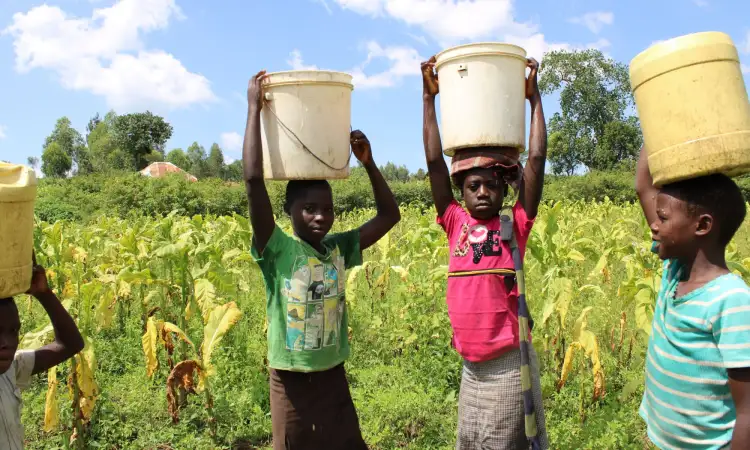
Additionally, water access is a struggle for many, where the closest point can be miles away from home. This situation is familiar to many in rural African communities, and often results in hunger, gender inequalities and missed school, as women and children are usually responsible for collecting water.
How Ripple Effect helps farmers conserve water
Ripple Effect works with rural families to adopt sustainable farming practices that improve how water is captured and used on their farms.
Rather than relying on expensive technology, these approaches build on local knowledge and ecosystems, helping farmers strengthen their land for the long term.
Improving soil to hold more water
Healthy soil is one of the most powerful tools for water conservation.
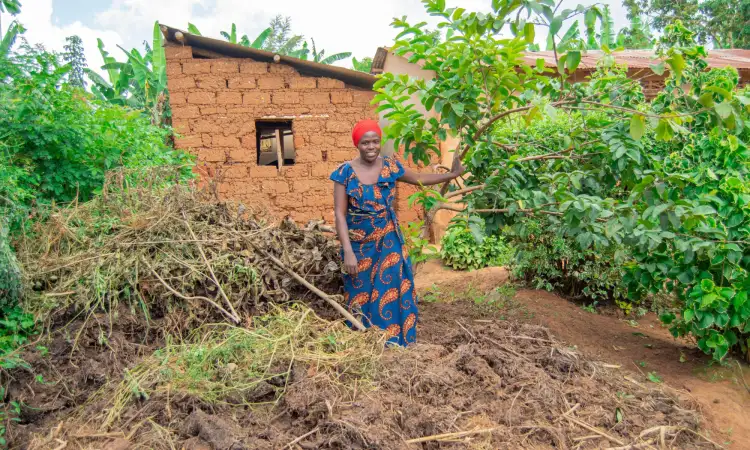
Through training and peer learning groups, farmers learn how to build soil fertility using organic materials such as crop residues, compost, and manure. As organic matter increases, the soil structure improves and becomes better able to retain moisture during dry periods.
This means crops can continue growing even when rainfall is limited.
Protecting soil with mulching
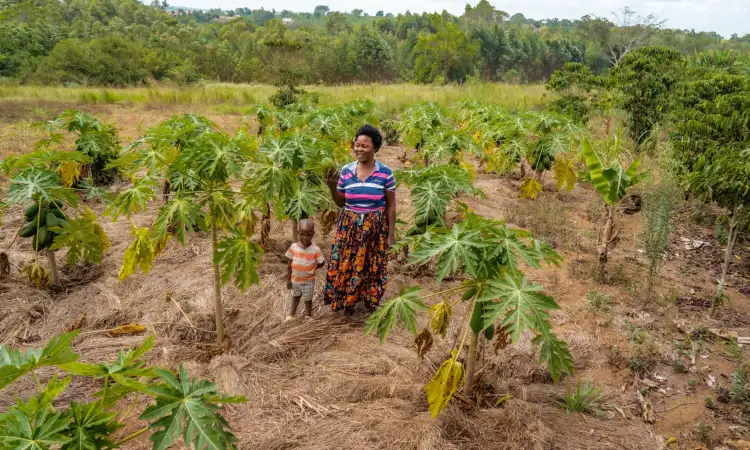
Mulching (covering the soil with plant material) is another simple but effective technique.
By adding a protective layer of crop residues or grass, farmers can:
- Reduce water evaporation from the soil
- Protect the ground from heavy rainfall
- Improve soil fertility as the material breaks down
This helps keep the soil cooler and moister, creating better conditions for crops to grow.
Shaping the land to capture rainwater
In areas with sloping land, rainfall can quickly run downhill and disappear.
Farmers learn how to shape their fields with features such as trenches and Tumbuzika gardens that slow the flow of water. Instead of rushing away, rainwater spreads across the land and has time to soak into the soil. These techniques are also effective on flat land, particularly for Tumbuzika gardens, as water is directed straight to the crops’ roots and retained there.
This approach not only conserves water but also helps prevent erosion and protects valuable farmland.
Planting trees for resilient farms
Trees play an important role in regulating water within the landscape.
Through agroforestry, farmers plant trees alongside crops to provide shade, improve soil structure, and increase organic matter. Tree roots help the soil absorb water more effectively while reducing runoffs during heavy rains.
Over time, these changes help farms become more resilient to droughts and extreme weather.
Building springs and water tanks
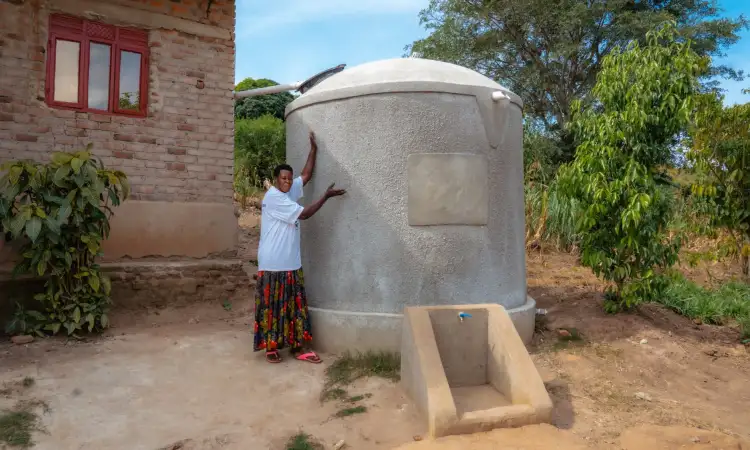
Ripple Effect also helps families access reliable water through water tanks and community springs, bringing water closer to homes and farms.
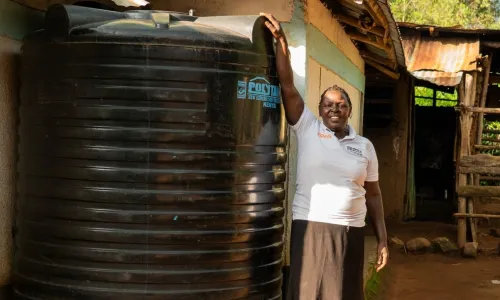
By constructing storage tanks, rainwater can be captured during the rainy season and stored for use during dry periods, reducing the distance families need to travel for drinking and irrigation.
Community springs are rehabilitated and protected to ensure a safe, clean water source for everyone, helping to improve hygiene, reduce waterborne illnesses, and support small-scale farming.
Farmer story: Tyson
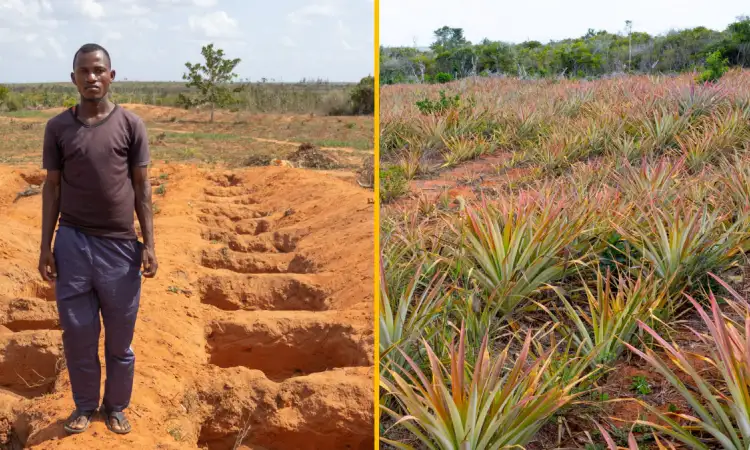
For Tyson, a Ripple Effect project participant in coastal Kenya, water scarcity is a daily reality. The 26-year-old farmer lives around 12 kilometres from the nearest working water point after closer sources dried up during a prolonged drought.
Like many families in the area, Tyson and his neighbours pool money to hire a motorbike driver to collect jerry cans of water, leaving each household with as little as 20 litres a day for drinking, cooking and washing.
With none left for irrigation, Tyson’s crops depend entirely on rainfall. Yet despite these challenges, Tyson is building hope for the future.

Through training from Ripple Effect’s Low Hanging Fruits for Youth Employment project, he has learned sustainable farming techniques that help protect soil moisture, such as using plant material as mulch instead of burning it. He also has built a Tumbuzika garden for his crops, helping retain moisture after rainfall, and directing water to the roots.
These skills have helped him start a pineapple business and sell seedlings, creating new opportunities even in the face of drought.
Tyson believes that with the knowledge he has gained, when the rains return he will be ready to make the most of every drop.
“Before Ripple Effect, I could not start a business because I was struggling just to get food. Now I have started selling pineapple seedlings and I believe I will go further.” – Tyson
Stronger farms, stronger communities
When farmers can conserve water and improve their soil, the benefits ripple outward.
Better soil moisture leads to healthier crops and more reliable harvests. Families can produce enough food to eat, sell surplus at market, and invest in their farms and futures.
By conserving water and restoring the land, rural communities are not only adapting to climate change, they are building a more secure and sustainable future.
How you can support our work



Want to hear good news stories from Africa, get involved in fantastic fundraising and be part of exciting events? Fill out your details below and we will keep you updated by email.