

How caring for donkeys strengthens families and livelihoods in rural Ethiopia
Approx. 7 min read
By Solen Dessalegn, Programme and Institutional Funding Manager, and Anna Borsboom, Digital Marketing Manager at Ripple Effect
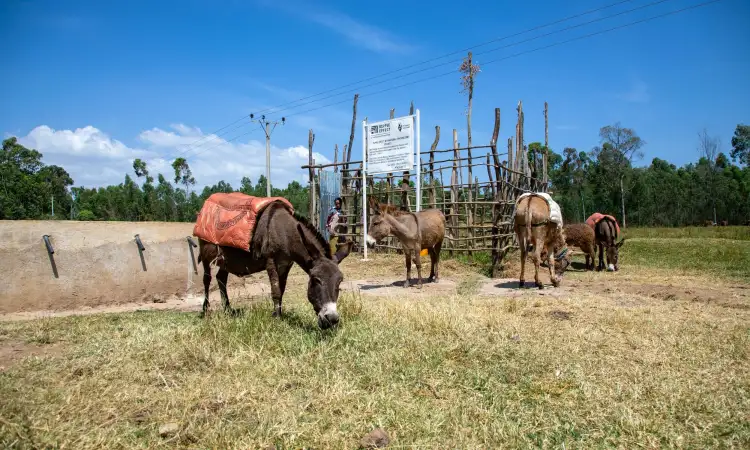
In Wonchi, Ethiopia, donkeys and mules are more than animals; they are lifelines. They carry water up steep paths, transport crops to market, and haul firewood and building materials. For many families in Wonchi, equine welfare is directly tied to household income and stability.
Challenging conditions such as scarce feed, difficult terrain, and limited income make it hard for owners to meet all their animals’ welfare needs. Traditionally valued mainly for their labour rather than as sentient beings, these animals are often kept by families already facing climate shocks, restricted income opportunities, and poor access to water, which further compounds the challenge. As a result, productivity declines, veterinary care becomes unaffordable, and livelihoods grow increasingly fragile.
To address these intertwined issues, Ripple Effect implemented the Equine Welfare for Livelihood Development project, funded by The Donkey Sanctuary (TDS). Over two years, the project aimed to improve the welfare of donkeys and mules while strengthening the resilience and income of the families who depend on them.
When working animals thrive, communities thrive too.
From forgotten animals to valued family members
Limited access to veterinary services before the project meant many owners in Wonchi felt they had few options when animals became seriously ill. "Previously, I believed that once a donkey became sick, it would eventually die..." recalls Chimdi, project participant. “Now I understand that donkeys can recover with proper care and treatment.”
An assessment identified three major welfare challenges in this region:
- Poor nutrition
- Demanding and sometimes harmful working conditions
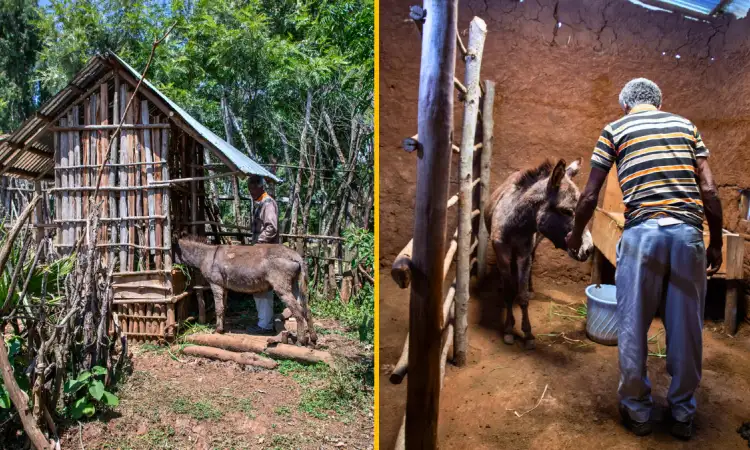
- Lack of appropriate shelter
These issues were compounded by economic hardship, climate shocks, and limited access to clean water. Long-term improvement required addressing both animal welfare and household resilience.
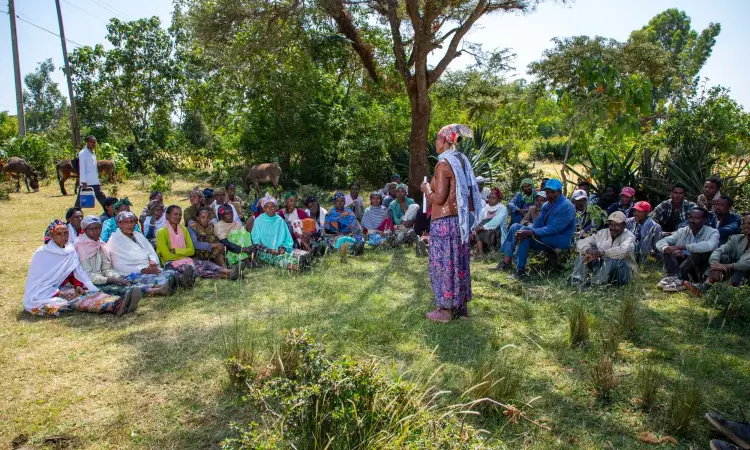
Through training and dialogue, donkey owners began to see the link between welfare and productivity, and between compassion and economic stability. Even small, well-targeted interventions, like demonstrations on feeding, humane harnessing, and shelter construction, sparked lasting change. This shift in mindset became one of the project’s most transformative outcomes.
A holistic approach to equine welfare and livelihood development
Recognising that animal welfare and household resilience are inseparable, the project focused on three interlinked areas:
1. Improving donkey welfare
Owners were trained in humane handling, improved feeding, and safe harness use.
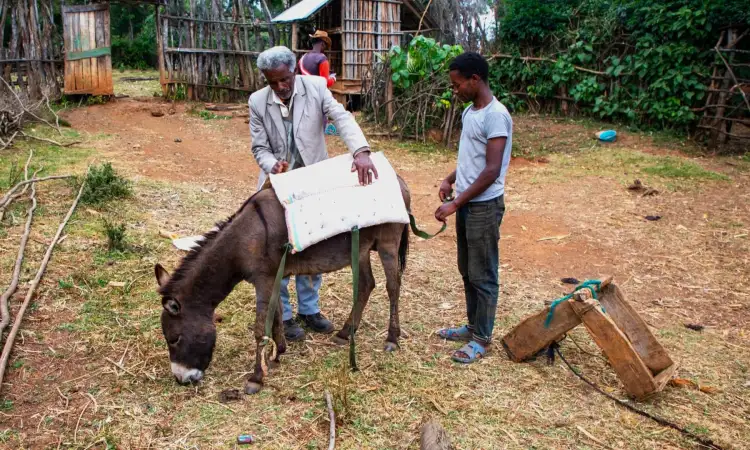
Demonstration shelters and feeding troughs showed how to protect animals from harsh weather, while specialised training by The Donkey Sanctuary enabled communities to produce 294 scientifically designed pack saddles and 324 hobbling ropes, preventing wounds and promoting comfort.
In fact, the saddle-making workshop was so effective that many trained farmers are now exploring pack saddle production as a new income-generating activity as community demand for them is increasing.
2. Strengthening household livelihoods
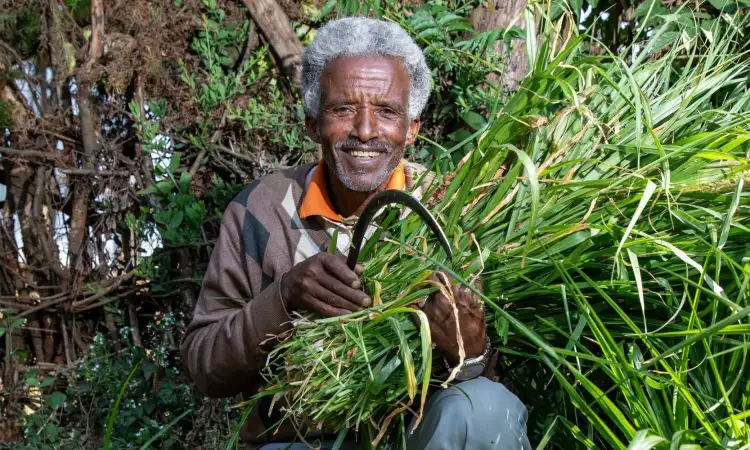
Families received vegetable seeds and fruit seedlings to diversify income and improve nutrition.
Improved feed cultivation, complemented by training from the Holeta Agriculture Research Center on soil fertility and vermicomposting, boosted both agricultural productivity and the health of donkeys and other livestock.
Community savings and loan initiatives gave households greater financial flexibility, ensuring that better welfare was economically sustainable.
3. Promoting community education and leadership
School clubs we educated on equine welfare, sustainable agriculture, and social inclusion.
Community-led task forces were set up, including local government members, to raise awareness of donkey welfare and ensure adherence to new welfare regulations.
Around 2,500 people received donkey welfare information during World Donkey Day celebrations, which combined market demonstrations, student marches, and social media campaigns, sparking wide online engagement.
Awareness events also highlighted the crucial role of donkeys in reducing the workload of women and children, linking animal welfare with gender equity.
Healthier donkeys, stronger families
The programme’s impact was clear. Over two years, the project directly reached 7,650 people, with a further 27,540 benefiting from knowledge shared within the community.
Key results:
- 98% of participants improved donkey management practices
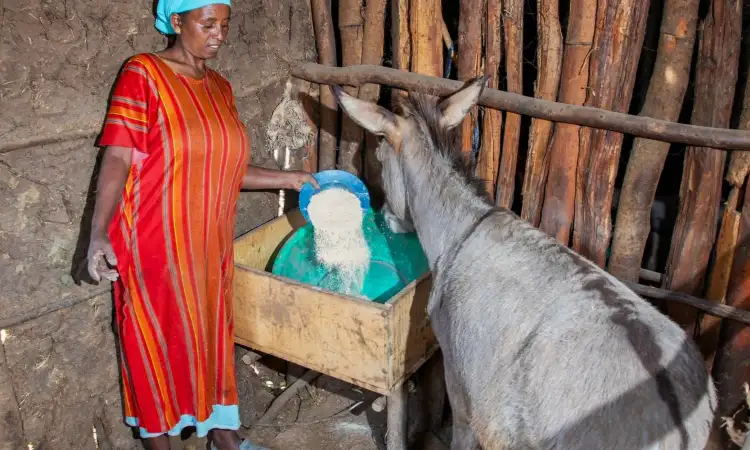
- 61% provided more nutritious feed for their donkeys
- 76% increased financial resilience through multiple income streams
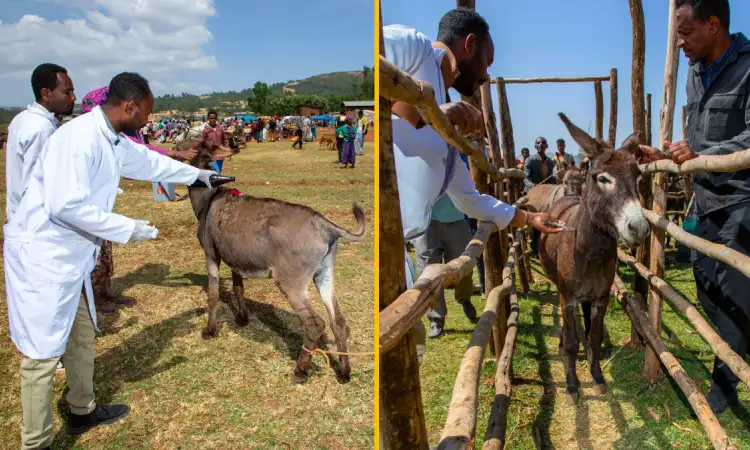
Healthier donkeys meant more consistent work, fewer veterinary emergencies, and stronger household incomes. Families preserved seeds for future planting seasons, creating sustainable feed sources and reducing dependency on external inputs. Improved feeding also benefited other livestock, increasing dairy production and boosting earnings.
Kabaye, project participant, explained:
"Thanks to Ripple Effect and the donor, I now have access to cash throughout the year. Before the project, my family faced severe cash shortages, especially during the summer, but now we pass the entire season without financial hardship."
Access to water was another critical barrier. The project developed a spring and water distribution system with animal troughs, providing clean drinking water to 190 households and improving access for over 1,800 animals. This reduced waterborne disease and shortened the time children and women spent fetching water.
Community leadership and next generation engagement
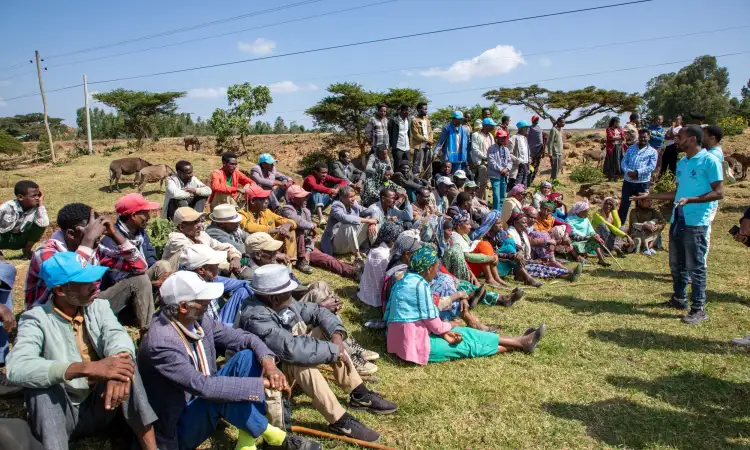
To ensure lasting impact, community task forces were established in every kebele (village). These groups promote proper donkey management, facilitate deworming campaigns, and advise owners on humane practices. Water management committees now oversee spring infrastructure, supported technically by local government offices.
Five school clubs trained in equine welfare and sustainable agriculture have become powerful messengers, sharing knowledge with families and helping shift long-held attitudes. These efforts create a ripple effect, ensuring that improved practices continue beyond direct project participants.
"I sincerely thank Ripple Effect and The Donkey Sanctuary for supporting this blessed work that recognises and supports the often-overlooked animal, the donkey." - Tamirat, local leader (Kebele Administrator)
Lessons learned
The project revealed that sustainable change begins with mindset. Owners who understood the needs of their animals and the economic benefits of proper care became active drivers of change. However, awareness alone was insufficient; improved income was essential to sustain feeding, veterinary care, and shelter.
Even modest interventions can yield substantial results. Community task forces quickly became effective champions, school engagement accelerated awareness, and linking welfare to livelihoods strengthened both outcomes.
Flexible budgeting allowed the project to navigate high inflation, while technical support from The Donkey Sanctuary ensured high-quality training and systems, including the use of EARS assessment tools and One Health practices.
Sustaining change beyond the project
At Ripple Effect, we form projects with sustainable, community-led change at the forefront of our minds – so that communities continue to benefit from our inputs long after a project is completed.
A Transition, Sustainability, and Exit Team worked closely with community representatives, government offices, and project staff to embed interventions within existing systems. Physical assets (spring water points, shelters, feeding troughs) were formally handed over, and management responsibilities passed to trained community committees.
This approach shifted the model from project-led to community-driven action, ensuring that donkey welfare and livelihoods are maintained long-term. With participants committed to sharing knowledge and practices, and communities equipped to sustain the changes, plans are already underway to scale interventions to new regions.
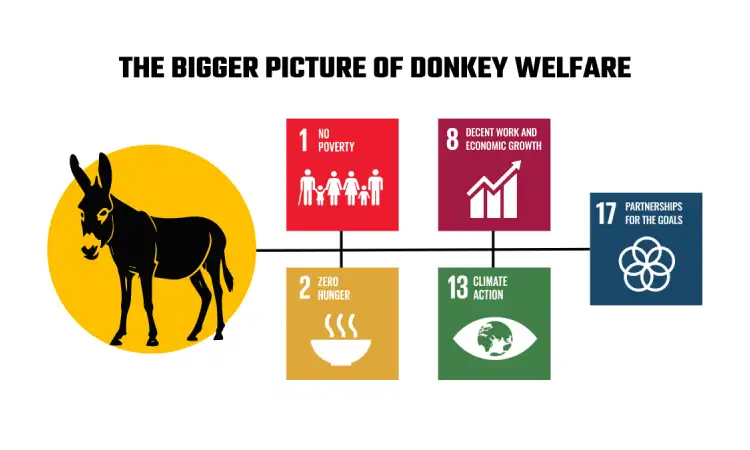
Contributing to Sustainable Development Goals
The project contributed to multiple SDGs:
- SDG 1 & 8 (No Poverty & Decent Work): Healthier donkeys support stable income and transport.
- SDG 2 & 13 (Zero Hunger & Climate Action): Improved agricultural production, water access, and sustainable forage practices increased resilience to drought and food insecurity.
- SDG 17 (Partnerships for the Goals): Collaboration between communities, government, and partners established systems for long-term welfare and livelihoods.
A shared future for donkeys and communities
In Wonchi, donkeys are no longer forgotten animals. The project demonstrates that caring for working animals strengthens families, improves livelihoods, and fosters resilient, empowered communities.
Healthier animals and community-led systems ensure that the benefits ripple outward, supporting families and local economies long after the formal project has ended.
Thank you to all the families, community members, partners, and supporters whose dedication and care have made healthier donkeys and stronger livelihoods in Wonchi possible.
Support our work and transform lives
Your support helps families and their animals thrive. Whether it’s sharing our mission, making a donation, or exploring partnership opportunities, every action contributes to stronger livelihoods and more resilient communities.

Want to hear good news stories from Africa, get involved in fantastic fundraising and be part of exciting events? Fill out your details below and we will keep you updated by email.