

Empowering women farmers in rural East Africa
Approx. 8 min read time
By Sofanit Mesfin, Gender & Social Inclusion Coordinator, and Betel Gezahegn, Content Executive at Ripple Effect
Women farmers play a vital role in rural East Africa. They grow food, care for livestock, support their families and help sustain local economies. In subSaharan Africa, women make up nearly half (49%) of the agrifood systems workforce and about 76% of working women are employed in agrifood systems, highlighting their central role in food production and related activities (FAO). Yet despite their essential contribution, many still face unequal access to land, finance, training and decision-making power.
Across the communities where Ripple Effect works, women are at the centre of agriculture. They are not only producing food, but also helping families improve food security, adapt to climate challenges and build more resilient futures. But too often, women benefit the least from the work they do.
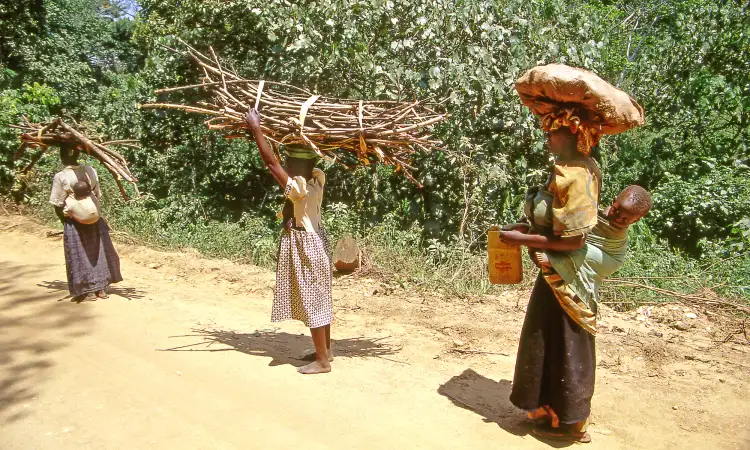
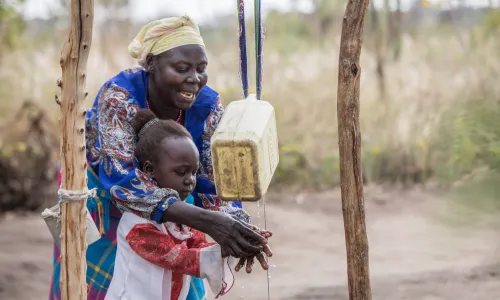
For many women, the day starts long before they reach the farm. Preparing food, caring for children, collecting water and managing the home often come first. By the time farming begins, they are already carrying a heavy load of unpaid care work.
That shapes everything that follows: the time they have, the opportunities they can access, and the choices they are able to make.
A global moment to recognise women farmers
In 2026, the International Year of the Woman Farmer is placing a global spotlight on the role women play in food systems and sustainable development. It reflects a growing recognition that women are not only central to agriculture, but also to building resilience in the face of climate change.
But recognition alone is not enough. For many women farmers in rural East Africa, inequality remains a daily reality.
Why women farmers in East Africa are still being left behind
Women farmers face multiple, overlapping barriers that make it harder for them to thrive.
They often have less access to land ownership, finance, tools, training and agricultural knowledge. Many also have less control over household income and resources, while carrying the greatest responsibility for unpaid care and domestic work.
These barriers are shaped by social norms that influence who gets access, who makes decisions and whose voice is valued most.
The result is clear: women contribute enormously to farming and household care, but too often benefit the least.
What needs to change
To unlock the full potential of women farmers, these challenges must be addressed at their root.
This means strengthening gender equality and social inclusion, ensuring women have equal access to resources, training and opportunities. It also means challenging harmful norms and creating systems that support women’s participation and leadership.
Empowering women in agriculture is not only about inclusion. It is about transforming the systems that keep inequality in place.
How Ripple Effect supports women farmers
At Ripple Effect, women are at the heart of our work. More than 65% of participants in our programmes are women, to ensure they directly benefit from our training and support.
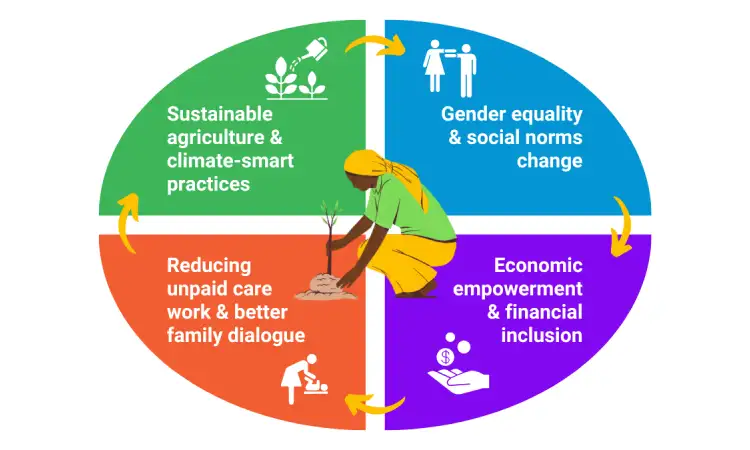
Women’s lives are shaped by many challenges at once. A woman may need better farming skills, but she may also need more time, more say in household decisions and more access to finance.
That is why Ripple Effect brings together sustainable agriculture, enterprise development and gender and social inclusion. Addressing these barriers across these three key areas helps create stronger, lasting change for women, their families and their communities.
This integrated approach is strengthened through initiatives like the Equal Roots Fund, which enables donors to support our gender inclusion work.
Improving women’s access to knowledge and skills in sustainable agriculture
We support women farmers with practical skills in sustainable agriculture, helping them make the most of the resources they already have while building long-term resilience.
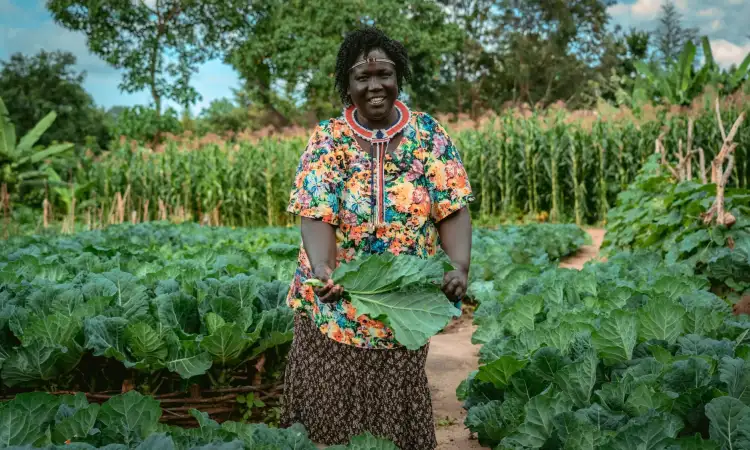
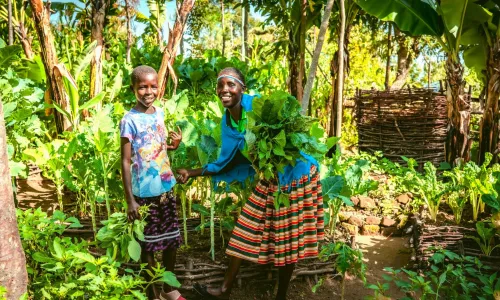
Across Kenya, Burundi, Ethiopia, Rwanda, Uganda and Zambia, Ripple Effect works with women to promote climate-smart farming that strengthens food security and helps families adapt to a changing climate. This includes agroecological approaches that can improve soil health, increase crop diversity, and strengthen resilience to changing weather patterns.
These are practical tools that help women improve productivity, support their families and build more resilient livelihoods. In a region where climate shocks can quickly threaten harvests and incomes, that support is especially important.
Reducing the burden of unpaid care work
One of the biggest barriers to women’s economic participation is unpaid care work.
When women carry most domestic responsibilities alone, they have less time for farming, training, enterprise and leadership opportunities. In some communities, women may spend up to 16 hours a day on unpaid care work, limiting their ability to participate, learn, earn and lead.
Through our Transformative Household Methodology, families are supported to reflect on inequalities, share workloads more fairly, have an equal control over resources and make decisions together. Developed by Ripple Effect staff in Ethiopia, it is now standard across all programmes, and helps shift norms at both household and community level.
In some communities, for example in Ethiopia and Kenya, the development of safe and accessible childcare centres also creates more time and opportunity for women to participate fully in farming and enterprise. On a bigger scale, these projects are influencing local policies relating to childcare and unpaid care work that women face, building strong foundations for supporting more rural women in these communities.
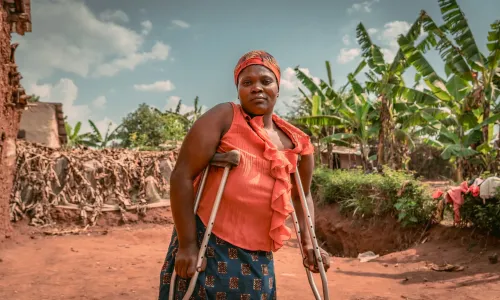
Bekelech, project participant in Ethiopia
This shift in shared responsibility shows how practical support can transform everyday life.
Strengthening women’s economic independence
Economic empowerment is essential for lasting change.
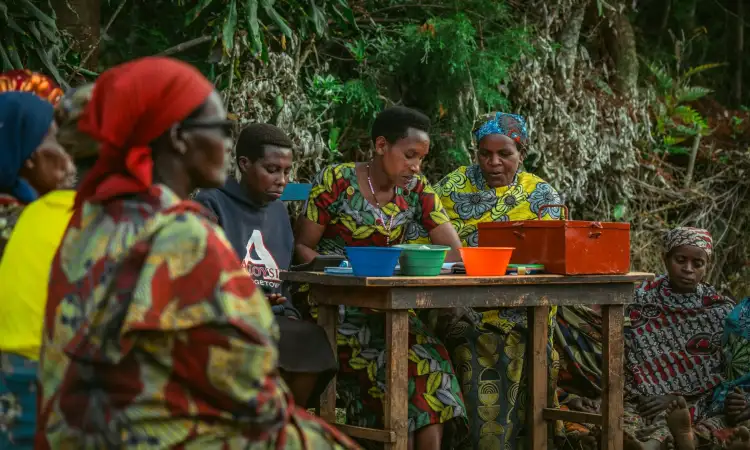
Ripple Effect supports women through enterprise development, including savings groups, business training and improved access to financial services.
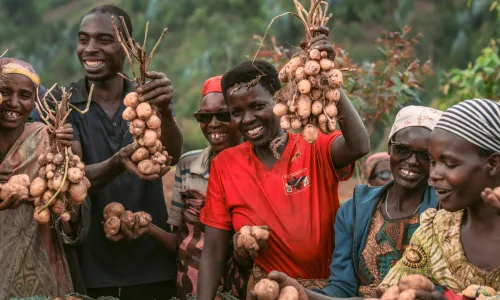
These opportunities help women build financial resilience and invest in further income-generating activities to reduce reliance on harvests, which at times may fail due to climate shocks. Over time, this strengthens confidence in decision-making, increases equality over investments, and supports more stable livelihoods.
Why this matters on a bigger scale
It matters for all individuals to have a voice and feel valued, regardless of their gender, age or background. The effect of gender and social inclusion is seen on a bigger scale, impacting more than just those individuals.
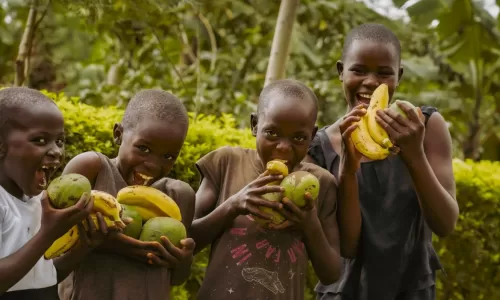
When women have the opportunity to learn, lead and earn, the benefits extend far beyond individual households. Families are better nourished, incomes are more stable, and knowledge spreads more widely.
In our programmes, we have seen a great deal of women becoming role models for others. They are elected as community group leaders, and are showing what their contribution can achieve, helping to shift mindsets of all members and pioneering change locally. Our support helps them take that first step and sparks hope – but their courage, determination and ambition is what is making this transformation a lived reality.
How you can support this work
Investing in women farmers in rural East Africa, and across the globe, is essential for a more equitable and sustainable future.
You can support this work by making a donation to the Equal Roots Fund.
Other ways to get involved:

Want to hear good news stories from Africa, get involved in fantastic fundraising and be part of exciting events? Fill out your details below and we will keep you updated by email.