

Why kitchen gardens are a powerful tool for climate resilience and nutrition
Approx. 6 min read time
By Meshark Sikuku, Farm Systems and Sustainability Coordinator, and Anna Borsboom, Digital Marketing Manager at Ripple Effect
Across many rural communities, families are facing increasing pressure on their food systems. Climate change and limited access to land are making it harder for households to produce enough nutritious food. Yet one simple, proven solution continues to make a significant difference: kitchen gardens.
At Ripple Effect, we have seen how small household gardens can improve nutrition, strengthen climate resilience, and create opportunities for all to generate income. While kitchen gardens may appear simple, they are supported by strong evidence and practical results from communities around the world.
From “Victory Gardens” to household nutrition
Kitchen gardens are not a new idea. In fact, they became widely promoted during the final years of World War II, when food shortages affected many countries.
Governments encouraged households to grow vegetables around their homes to supplement rationed food supplies. These gardens became known as Victory or War gardens. Families grew vegetables in backyards, school grounds, and community spaces, helping to feed themselves while freeing up larger agricultural production for the war effort.
Today, the concept has evolved across the world, but the principle remains the same: growing food close to home can significantly improve food security and resilience.

Why kitchen gardens matter for food security today
For many rural families, kitchen gardens provide a reliable and accessible source of nutritious food. By growing vegetables and other crops near the home, households can:
- Improve diet diversity with fresh vegetables and herbs
- Reduce dependence on purchased food
- Ensure year-round access to nutritious ingredients
- Supplement household income by selling surplus produce
Kitchen gardens are particularly valuable for families with limited land, allowing them to grow a variety of crops in small spaces. But some families with larger plots of land may still face food insecurity due to the lack of resources to invest in soil regeneration and water management systems. Kitchen gardens are also a great solution in these cases, as they require a low amount of locally available resources to set up, and conserve water effectively for soil fertility and crop growth.
Evidence from around the world
Research from several countries demonstrates the impact kitchen gardens can have on nutrition and food security.
Studies in Nepal have shown that kitchen garden programmes significantly improve household dietary diversity and nutrition knowledge. Families participating in these initiatives reported higher food consumption scores and more varied diets.
In India, research on homestead gardening found a strong link between household gardens and improved food security for both rural and urban families.
Similarly, studies in Tanzania found that households with kitchen gardens experienced measurable improvements in food consumption and nutrition outcomes.
At Ripple Effect, our programmes across Kenya, Burundi, Rwanda, Ethiopia, Uganda and Zambia integrate a variety of kitchen garden practices, enabling families to become food secure and lift themselves out of poverty, regardless of the type of land they own.
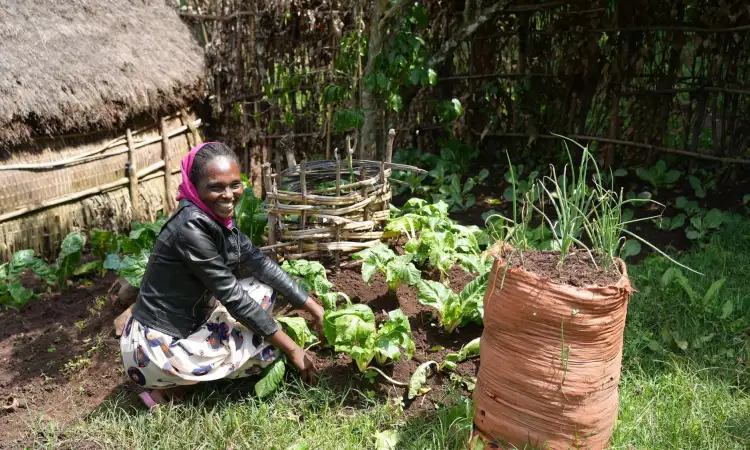
Supporting climate resilience
Kitchen gardens also help communities adapt to the impacts of climate change. Many of the techniques used in kitchen gardening promote healthy soils and efficient water use, which is particularly transformative for the rural African communities on the frontlines of the climate crisis, who often rely on rainfed agriculture.
Farmers often incorporate practices such as:
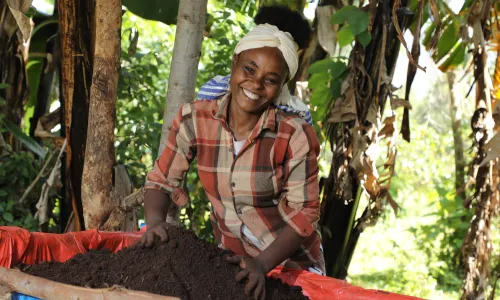
- Composting and organic manure
- Mulching to retain soil moisture
- Mixing crop residues into the soil
- Water harvesting methods
These practices improve soil structure, increase moisture retention, and allow crops to continue growing even during dry periods. In some cases, farmers are able to harvest vegetables during drought conditions thanks to these resilient gardening methods.
By combining local knowledge with sustainable practices, kitchen gardens can help households adapt to increasingly unpredictable weather patterns.
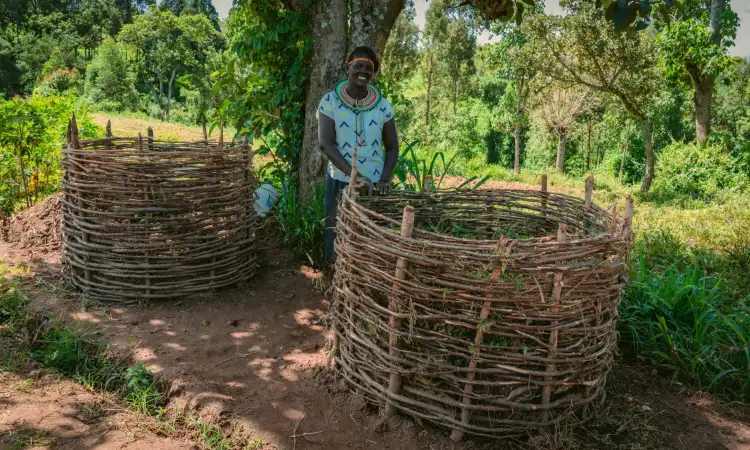
Empowering women and strengthening inclusion
Kitchen gardens also contribute to greater gender inclusion and economic empowerment.
In many agricultural systems, highly commercialised farming activities tend to be dominated by men, particularly where land ownership, contracts, and financial services are involved. However, smaller household enterprises, such as vegetable growing, poultry keeping, and selling produce at local markets, are often managed by women.
Kitchen gardens provide women with opportunities to:
- Grow food for their families
- Generate small but meaningful income
- Participate in local markets
- Gain greater decision-making power within households
Because these gardens require relatively small plots of land and low financial investment, they are accessible to more people, including women, young people and elders, people living with disabilities and households with limited resources.
Practical kitchen garden techniques farmers use
Kitchen gardens can take many forms depending on the local environment and available materials. Ripple Effect project participants use a range of techniques designed to maximise productivity in small spaces. These approaches use locally available materials, making them affordable and easy for farmers to adopt and maintain.
Some examples include:
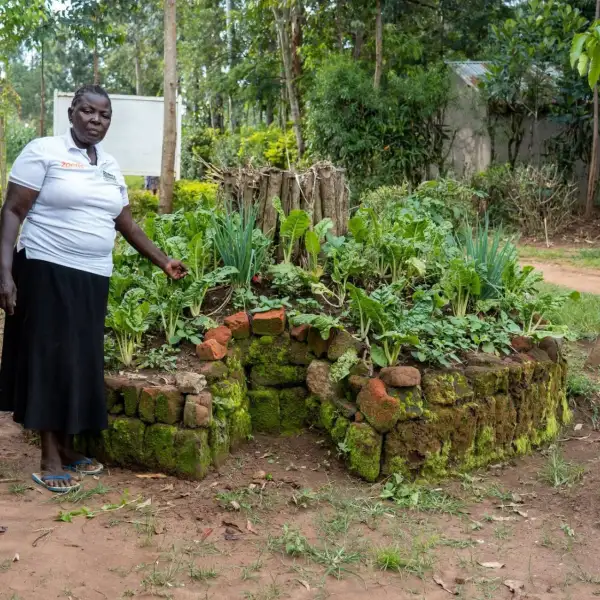
Circular raised beds with a compost basket in the Centre that continuously feeds nutrients into the soil.
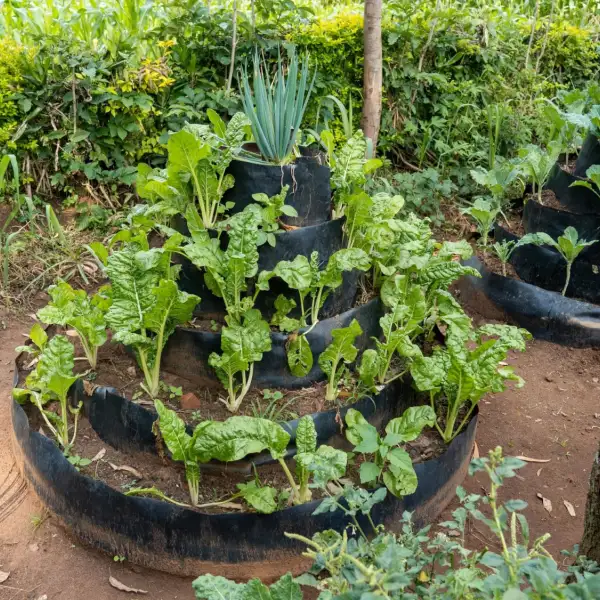
Constructed in layered circular structures forming a cone shape. They involve stacking soil and organic matter in layers, which improves water retention and nutrient availability.
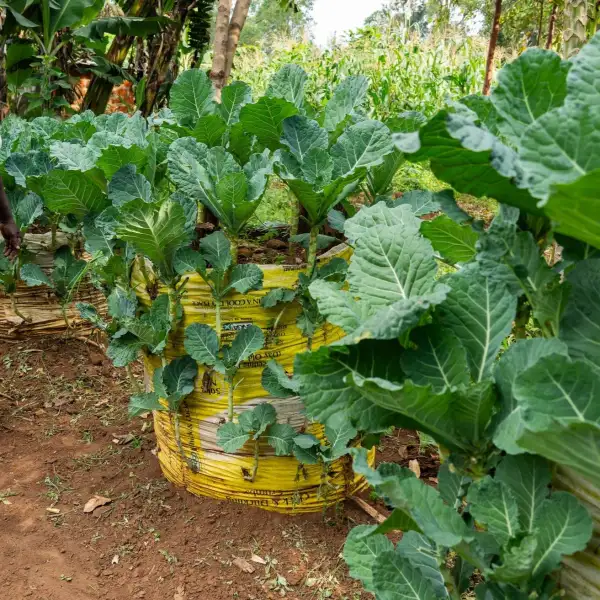
Vertical gardens created using sacks filled with soil, allowing farmers to grow vegetables where land is scarce.
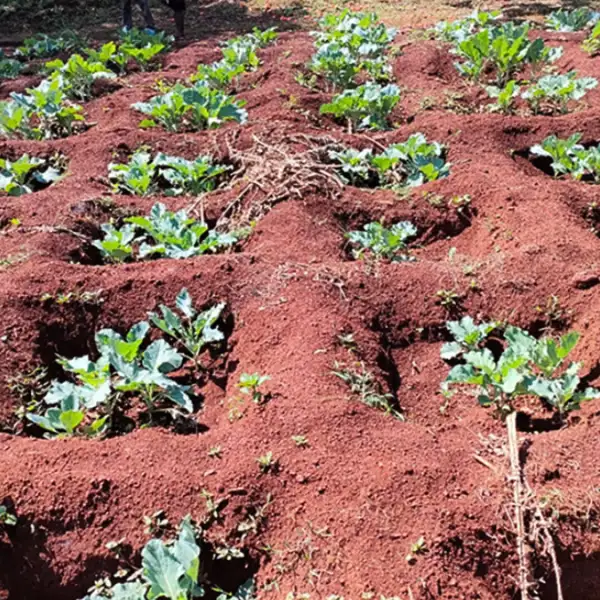
Small planting holes filled with compost and organic matter. These pits capture water and nutrients directly around the plant roots.
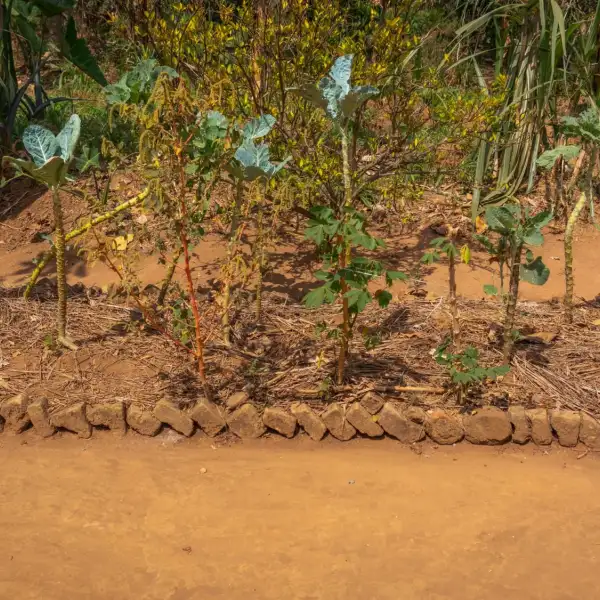
Elevated garden beds that improve drainage and protect soil from compaction.
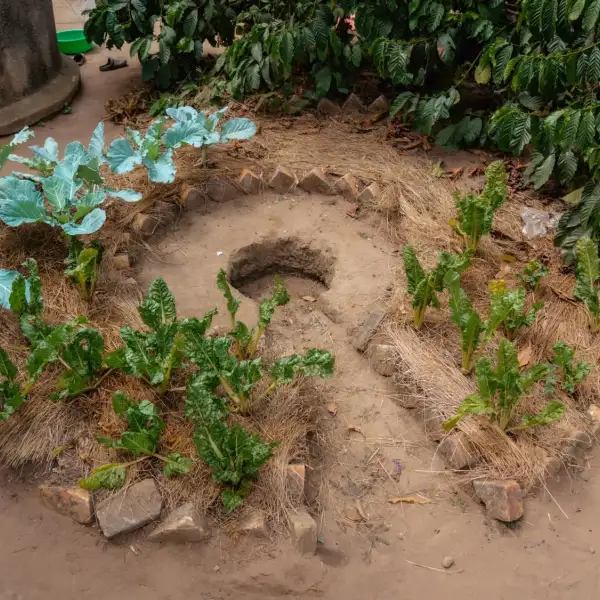
Mandala gardens are circular gardens designed to harvest water at the centre. Water flows into a central pit, providing moisture for crops planted around it.
Small gardens, big impact
Kitchen gardens may be small in size, but their impact can be significant. They improve nutrition, strengthen resilience to climate shocks, support marginalized communities’ economic participation, and help families become more self-sufficient.
By combining evidence-based approaches with practical solutions, Ripple Effect continues to support farmers in building more resilient and sustainable food systems, starting right outside their homes.
How you can support our work


Want to hear good news stories from Africa, get involved in fantastic fundraising and be part of exciting events? Fill out your details below and we will keep you updated by email.