

Navigating the winds of change: challenges faced by the non-profit sector
Approx. 8 min read
By Paul Stuart, CEO at Ripple Effect
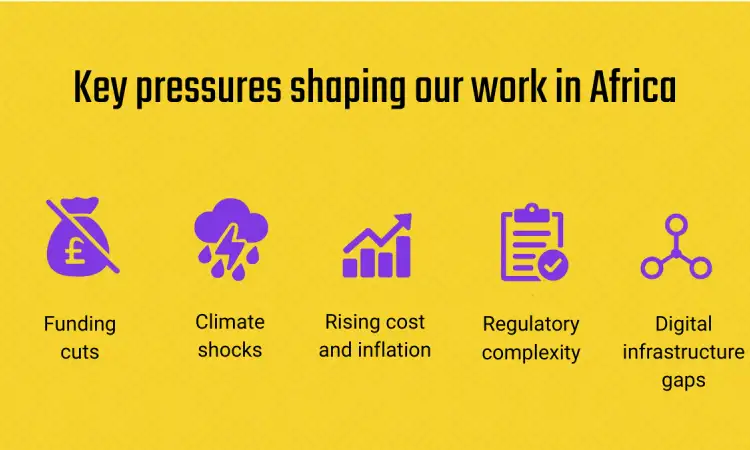
Non-profit organisations around the world are navigating a period of growing uncertainty. Funding is tightening, climate shocks are intensifying, and inflation is increasing the cost of delivering programmes.
These pressures were discussed at the World Food Programme Annual Partnership Consultation (WFP APC). For Ripple Effect, these conversations reflected realities our teams and the farming families we work with are already experiencing across rural Africa.
Why the non-profit sector is under strain: lessons from WFP APC 2025
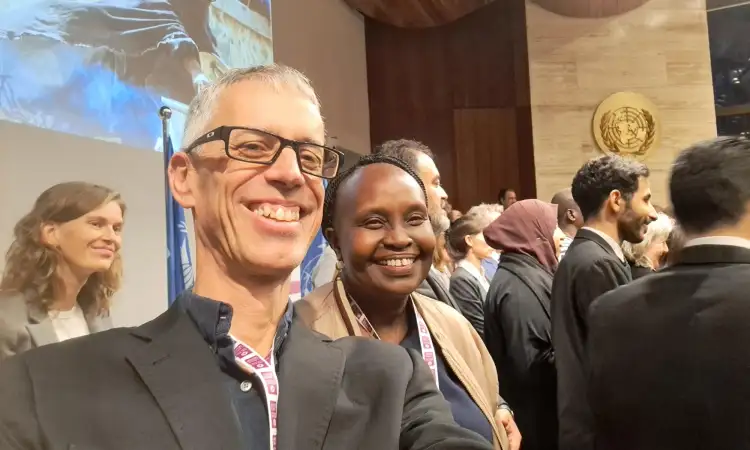
Recently, Pamela Ebanyat, Uganda Country Director at Ripple Effect, and I attended the WFP APC to hear how other organisations are experiencing similar pressures, and to join discussions on how the sector can respond together.
At the conference, one statistic captured the scale of the challenge. The World Food Programme has lost 40% of its funding since last year. That reduction is not simply a line in a budget; it means people who were already going hungry may now face starvation.
There was no attempt to soften the message. Speakers highlighted a set of pressures that are now shaping humanitarian and development work everywhere:
- Severe funding cuts, with agencies across the sector forced to scale back programmes or prioritise only the most urgent needs.
- A strong push towards localisation, with questions about how more leadership, resources and decision-making should shift to local partners.
- A redefined role for INGOs, with organisations encouraged to connect, convene, enable and share capacity rather than implement everything directly.
- A renewed emphasis on collaboration and partnership, highlighted by the launch of WFP’s new Partnership Pact.
- A focus on efficiency, including reflections on how operational savings could help reach millions more people facing hunger.
From the opening plenary, speakers called for honesty and boldness. Speakers urged organisations to hold a long-term vision, stay brave and smart, and keep dignity at the centre of their work. A key message for international NGOs was clear. Rather than doing everything directly, focus more on supporting and strengthening local partners.
There was also a strong emphasis on efficiency. WFP explained that early investment in communities and food systems is far more cost effective than waiting until people are displaced. They shared an example showing how even a small operational saving can unlock resources to reach more people facing hunger. That made me reflect on what this would mean for Ripple Effect's programmes and the communities we serve. For us, a 1 percent saving would release around £100,000, enough to reach an additional 10,000 people each year.
Pamela, who joined me at the event, noted how clearly localisation is being prioritised, and how closely it aligns with our existing programmes in her country, Uganda. One organisation shared its plans to move away from direct implementation and focus on building the capacity of local delivery partners. This reflects WFP’s localisation policy for 2026-2030, which prioritises: working more collaboratively with local organisations, engaging community-based groups more deeply, creating more opportunities for local entrepreneurs in supply chains, and ensuring local partners have a stronger voice in shaping policies and how programmes are coordinated.
As I reflected on the discussions, I was reminded that we can’t stop the wind, but we can adjust our sails. The challenges are real, but so is the determination of the farming families we serve.
Wider challenges faced by the non-profit sector
The issues discussed at the APC sit within a wider set of pressures that charities and NGOs, including our own, are facing globally. From our work and sector-wide conversations, several stand out:
- Different regulations between countries - and sometimes even between counties or districts - which slow implementation, increase administrative work and add compliance risks.
- Limited digital infrastructure in many rural areas, which can make it harder to collect real-time data, communicate with communities and demonstrate impact.
- Questions around community trust and participation, especially where people have seen projects arrive and disappear without lasting change.
These challenges are not abstract. They shape how quickly we can respond, how much support we can provide, and how confident communities feel about working with us.
These challenges were also at the front of our minds as we returned from the APC, and we have since been thinking about how they affect our work across Burundi, Ethiopia, Kenya, Rwanda, Uganda and Zambia. This has given us food for thought on how we are currently responding, and what else we might do to mitigate risks further.
How these global risks show up in Ripple Effect’s work
Our teams and the communities we work with are facing similar pressures. In the last financial year, Ripple Effect’s programmes supported over 1.1 million people in rural Africa, bringing us closer to our goal (69%) of reaching 5 million more people by 2030. But while this figure represents an uplift compared to the previous year, it wasn't without constraints. We were competing for increasingly limited funds, even as climate impacts and the global cost-of-living crisis intensified the needs of farming families.
Across our six countries, extreme weather has become more frequent and more severe. Heavy rainfall has led to flash floods and landslides in Kenya and Burundi, sweeping away crops, livestock and in some cases entire farms. In Ethiopia, periods of drought have followed seasons of heavy rain, while in Zambia, almost half of the country’s staple maize crop was lost to a prolonged drought that affected just under half the population and was declared a national disaster.
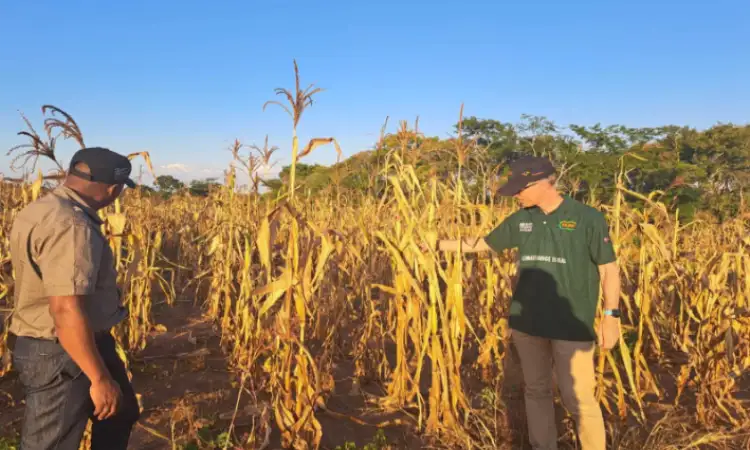
These climate shocks are layered on top of rising fuel and transport costs, alongside higher prices for essential farming inputs such as seeds, tools and livestock feed, as well as regular power cuts, which have been major constraints across East Africa. As inflation and operating costs rise, every pound must work harder for families and for the organisation. This is happening at a time when government aid budgets in several donor countries have been cut, and many funders have less flexibility, meaning we must raise more unrestricted(funding that can be used where it is needed most, rather than tied to a specific project) income simply to protect the progress communities are making.
In response, we have commissioned independent reviews of our programmes, strengthened our monitoring and evaluation systems, and deepened collaboration across our teams in Africa, the UK and the US. These steps are helping us adapt and improve, but they don’t remove the underlying risks. The gains that farmers are making are still vulnerable to forces well beyond their control.
Looking ahead: from pressure to practice
The pressures shaping the non-profit sector are not abstract. They are already influencing decisions about how organisations lead, partner, fund their work and stay accountable in a more constrained environment. For Ripple Effect, these realities have reinforced the need to keep adapting, while staying grounded in locally led, long-term solutions for farming families in rural Africa.
In our next article, we share how Ripple Effect is responding to these pressures in practice. From localisation and partnership to digital learning and farmer-led influence, we explore the shifts shaping how we work and why they matter for the communities we serve.
Staying engaged in a changing landscape
As pressures reshape the non-profit sector, sustaining locally led, long-term work depends on shared commitment. Flexible funding, strong partnerships and engaged supporters all play a role in helping organisations adapt while protecting progress for farming families.
To stay connected to Ripple Effect’s work, you can:
- Learn more about our approach to localisation, partnerships and farmer-led change
- Explore ways to support long-term impact, including unrestricted and legacy giving
- Sign up for updates and insights from our teams across rural Africa
By supporting our work, you help ensure farming families continue building resilient livelihoods, even in an uncertain global context.


Want to hear good news stories from Africa, get involved in fantastic fundraising and be part of exciting events? Fill out your details below and we will keep you updated by email.