

How refugees in Uganda are building economic empowerment through entrepreneurship
Approx. 8 min read time
By Deogratious Egeru, Enterprise Development and Innovation Coordinator, and Anna Borsboom, Digital Marketing Manager at Ripple Effect
Refugee communities are often spoken about in terms of displacement and need. But behind these labels are individuals and families who have crossed borders under extremely difficult circumstances. Many refugees in Uganda have fled violent conflict and political instability in neighbouring countries such as the Democratic Republic of Congo, South Sudan, Burundi, and Rwanda.
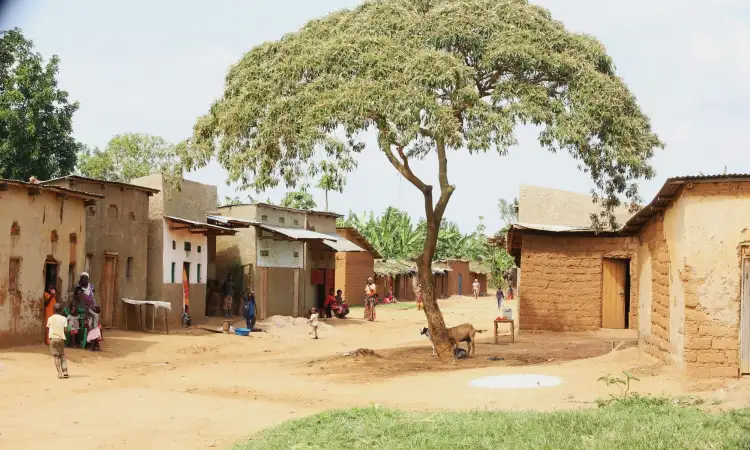
For many, the decision to leave home is sudden and traumatic. Families are separated and livelihoods are lost, with an overwhelming reality of needing to start everything again from scratch. On arrival in Uganda, refugees begin again, often in rural settlements where opportunities are limited and resources are stretched. Yet in districts such as Kikuube, Kamwenge, and Isingiro, a different story is beginning to take shape.
Here, refugees are not only rebuilding their lives; they are developing new skills and starting businesses to earn an income. With the right support and opportunities, entrepreneurship is becoming a powerful pathway for refugees to regain stability and independence, while contributing to the local economy.
Supporting refugees to build thriving livelihoods at their new home
Uganda hosts one of the largest refugee populations in the world, and its progressive policies make it an attractive place to start anew. Many refugee families are allocated small plots of land by their housing to grow food and put meals on the table. Despite the good intentions behind this initiative, the land given is often depleted and difficult to grow healthy crops on, with families having limited knowledge of how to restore soil health. Furthermore, access to finance and markets can be limited, making it a challenge for households to invest and earn an income from the few crops they grow.
Short-term humanitarian aid may help for a while but often leaves families struggling once resources run out. For sustainable change, a long-term approach to economic participation is required, where refugee families drive their progress in re-building their livelihoods thanks to some initial support in upskilling and access to key services.
Ripple Effect Uganda, working with partners including the World Food Programme (WFP), the International Labour Organization (ILO), and the Mastercard Foundation, is supporting refugees across three major settlements to build sustainable livelihoods through entrepreneurship.
Over 14,500 refugees are currently being supported through our integrated programmes that combine skills development in sustainable farming, access to finance, enterprise support, and market linkages.
Setting up the right foundations for long-term success: from skills to income
Economic empowerment for rural farming families doesn’t come from one type of support alone. It happens when people have the right combination of skills, resources, and opportunities to start growing steadily, and then earn an income.
Across our programmes, refugees are supported step by step to move from learning new skills to building reliable incomes and expanding their businesses.
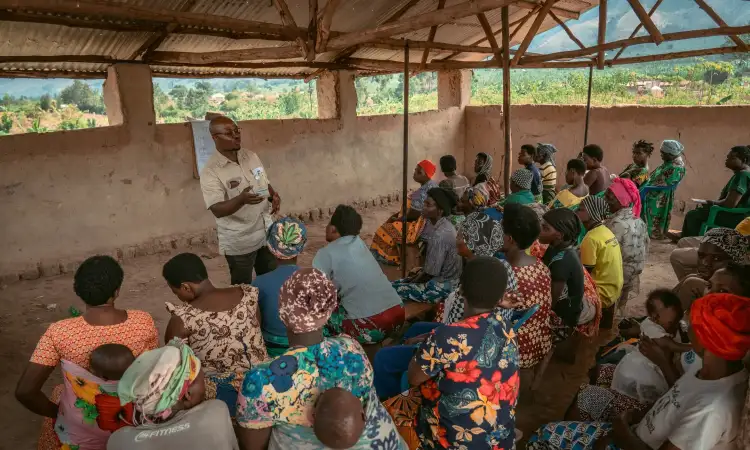
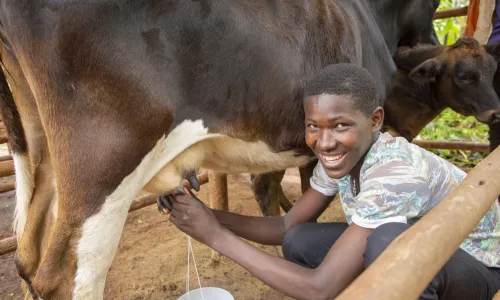
It often starts with practical training. Refugees learn skills they can use straight away, starting with how to restore soil, conserve water, and grow a variety of nutritional and profitable crops. Then they may choose to learn more specialised skills such as baking, poultry keeping, dairy production, or running small businesses. Many also take part in apprenticeships, where they learn by doing. Alongside new skills, they build the confidence to plan ahead as a family, set shared goals, and make decisions about their income together, creating more equal partnerships and ensuring women have a stronger voice in household decisions.
Once people have the skills to start earning an income, the next challenge is accessing the money they need to turn ideas into reality. Many refugee families have little or no savings when they arrive, making it difficult to buy equipment, livestock, seeds, or other essentials. Through savings groups, refugees regularly save small amounts alongside others in their community and can take out affordable loans to invest in their businesses. As they build a track record of saving and repaying loans, some go on to access larger loans from financial institutions, giving them the opportunity to expand their enterprises.
With skills and some capital in place, refugees begin to build their businesses. This might mean starting a small poultry enterprise, producing yoghurt, growing vegetables, or trading produce like beans and onions. Support at this stage is practical, guiding people to choose viable activities, improve quality, and in some cases, access equipment or start-up inputs. We also offer training in core business skills such as inventory management, accounting and marketing.
Just as important is connecting these businesses to markets. Refugees are supported to buy materials and equipment for production at fair prices, sell their products in local markets, and work together to bulk and sell larger quantities (often through cooperatives). This helps them reach more customers and earn stable incomes.
Taken together, this support creates a clear pathway: from learning and applying a skill, to earning an income, to investing in and growing a business. Rather than isolated activities, it is a connected approach that helps refugees build livelihoods that can last.
Refugee stories
The impact of this approach is best seen in the lives of the entrepreneurs themselves.
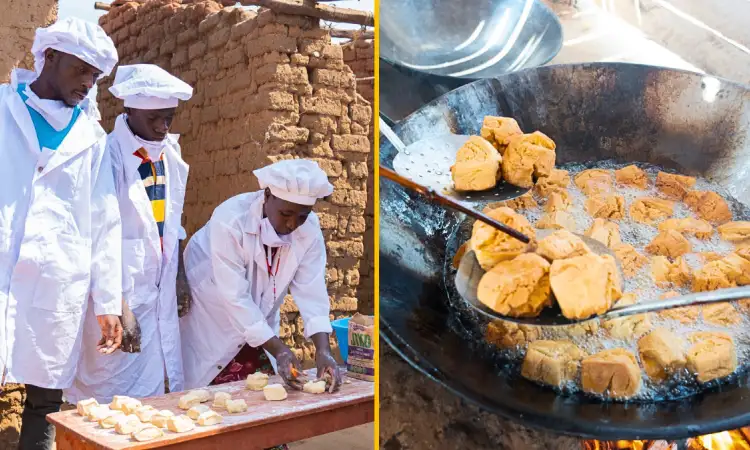
For Afia, a single mother of seven living in a settlement located in Kyegegwa District, the turning point came through training in baking and confectionery. Starting with a small home-based business, she gradually expanded production, invested in equipment through savings, and began supplying local markets. Today, she is financially independent and able to support her children without relying on food aid.
For Patience, a young woman with a physical disability in an Isingiro District refugee settlement, entrepreneurship has created both income and confidence. After training in dairy processing and learning how to add value to dairy products, she built a yoghurt and ghee business that now generates regular weekly income that supports her entire household.
Others have gone further, scaling their businesses and creating opportunities for others.
Janine, also in Isingiro District, has built a thriving produce aggregation business, trading tonnes of beans and maize across regional markets. Her enterprise now employs five young people, while also enabling her to invest in housing and her children’s education.
In Kamwenge District, Odetta, a widowed mother of six, has grown her confectionery business into a diversified enterprise. She now employs six young people, owns multiple income-generating assets including livestock and motorcycles, and trains other refugees in business skills.
Meanwhile, Mupenzi, a young entrepreneur, has expanded from small-scale farming into running a milling business and retail shop. His services support other farmers in the community, while his long-term vision is to establish a vocational training centre for young refugees.
These are not isolated success stories; they represent a broader pattern of transformation, where refugees move from initial skills acquisition to income generation, and in many cases, to business growth and job creation.
Community-led support is driving success
Importantly, this transformation is not happening in isolation. It is not driven by Ripple Effect and partners. We enable just the beginning with training and access, but it’s communities coming together to support and learn from each other that scale this work.
Across the settlements, refugees and host communities are working together through:
- joint farmer groups
- shared production systems
- collective marketing and trade
- shared land agreements
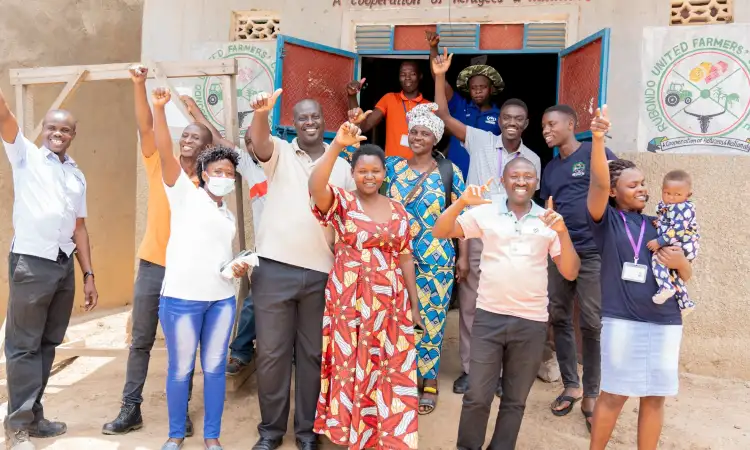
These interactions are strengthening relationships and creating shared economic opportunities. Shared enterprises and cooperative structures are helping to integrate local economies and foster social cohesion.
Overcoming constraints through innovation
Challenges remain. Limited access to land restricts large-scale farming, while transport, storage, and access to capital can slow business growth.
But rather than stopping progress, these constraints are driving innovation.
Refugees are diversifying into enterprises that require less land but offer strong returns, such as poultry, dairy, processing, and trade. Others are adding value to agricultural products, increasing income without increasing land use. Collective approaches, such as bulking and shared facilities, are helping overcome scale limitations.
A different narrative of displacement
What is emerging across these programmes is a powerful shift in perspective.
Refugees are not only recipients of support. They are:
- entrepreneurs building businesses
- producers and traders participating in markets
- employers creating jobs
- community members strengthening local economies
With the right support systems in place, entrepreneurship is enabling refugees to take control of their economic futures and contribute meaningfully to the communities around them.
Support this work through our Seed & Scale Fund
The impact of our programmes in Uganda demonstrates that economic empowerment is possible when refugees are given the initial tools and support required to succeed. By investing in enterprise and inclusive market systems, programmes like these are helping to build not just livelihoods, but resilient and integrated rural economies.
And at the centre of this transformation are refugees themselves; who despite their hardships, build themselves back up again and lead the way forward.
If their success stories have inspired you, you can invest in Ripple Effect's Seed & Scale Fund to support more rural entrepreneurs in building thriving businesses and stronger communities.

Want to hear good news stories from Africa, get involved in fantastic fundraising and be part of exciting events? Fill out your details below and we will keep you updated by email.