

How bees are helping communities and forests thrive in Zambia
Approx. 5 min read
By Michelo Mwaka, Strategy and Fundraising Manager and Matomola Matomola, Monitoring and Evaluation Manager at ZRDF, Ripple Effect programme delivery partners in Zambia.
Every year on 20 May, the world celebrates one of nature's most important workers: the honeybee. This year's World Bee Day theme, “Bee Together for People and the Planet”, resonates deeply with us at the Zambian Rainbow Development Foundation (ZRDF). For us, this theme is more than a slogan. It reflects the work taking place every day across the woodlands and farming communities of Mkushi and Luano Districts, where beekeeping and agroforestry are helping people improve their livelihoods while protecting the environment they depend on.
Zambia: a haven for bees
Bees cannot thrive where trees have been cut down, and communities cannot thrive where forests have disappeared. This simple truth is at the heart of ZRDF's integrated approach, which combines beekeeping and agroforestry as a strategy for both conservation and sustainable livelihoods.
Zambia's miombo woodlands are among the richest habitats for honeybees in Africa. In the communities where ZRDF works, including Luanshya, Masense, Mitwe, Kalubula, Kamimbya and Chibombo, studies have identified a wide range of nectar- and pollen-producing tree species that support healthy bee colonies throughout the year.
Among the most important are indigenous Miombo tree species such as Muombo (Brachystegia longifolia), Muputu (Brachystegia speciformis) and Mutondo (Cordyla africana). These trees provide a significant proportion of the nectar and pollen available during the main honey flow season, making them the backbone of both the woodland ecosystem and the honey it produces.
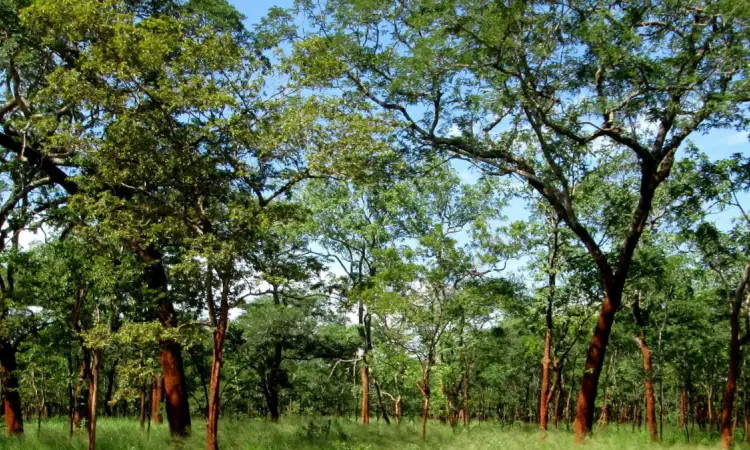
Alongside these indigenous trees, fruit trees also play an important role in supporting both people and pollinators. Species such as Mango, Mupundu and Mufinsa provide seasonal sources of nectar for bees while also producing nutritious fruit for households and local markets.
To protect and expand this living landscape, ZRDF has planted more than 11,000 trees in communities and schools, including Kampelembe Primary School in Luano District. The organisation also actively participates in World Tree Planting Day and other local conservation initiatives.
Every tree planted represents a future source of food for bees, a future harvest for farmers, and a future safeguarded for generations to come.
From forest to market: making beekeeping a viable business
Knowing how to keep bees is one thing; having a reliable market for your honey is another. For many small-scale beekeepers, access to buyers can be one of the biggest challenges.
ZRDF helps address this barrier by providing not only beekeeping equipment and training, but also honey processing services and access to markets. This allows farmers to focus on producing quality honey, knowing there is a pathway from hive to customer.
The programme is currently supporting around 100 farmers in its pilot phase. Together, they produce approximately one tonne of comb honey each year, with individual hives yielding between 20 and 25 kilograms of honey per harvest.
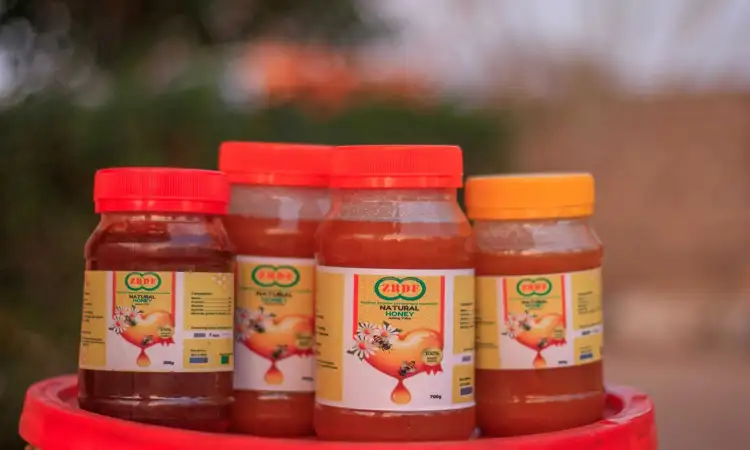
A key feature of the programme is its Investment Share Model, which ensures that income from honey sales benefits everyone involved while supporting the long-term sustainability of the initiative.
Revenue from each harvest is distributed as follows:
- 56% is paid directly to farmers and beekeepers.
- 33% is reinvested by ZRDF into the programme, helping fund training, harvesting equipment and ongoing technical support.
- 11% is paid to mentors and harvesters who provide specialist support in hive management and honey harvesting.
The model is designed to be self-sustaining. Farmers earn an income, mentors are compensated for their expertise, and programme revenues are reinvested to support future beekeepers. This helps ensure that the benefits continue to grow within the community over time.
ZRDF has also partnered with the Forestry Department to promote affordable mud beehives. These locally made alternatives to commercial hives reduce the cost of entering beekeeping, making the practice more accessible to households with limited resources.
Boniface's story: building a better future through beekeeping
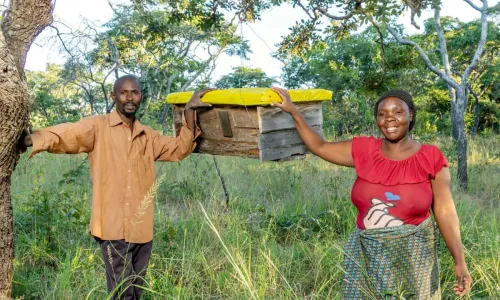
Boniface Kunda lives in Luano District, where he supports a family of eight. Like many rural farmers, he is constantly looking for ways to improve his family's wellbeing and create opportunities for the future.
When ZRDF provided him with two beehives, it marked a turning point.
With training, guidance and dedication, Boniface began harvesting honey from his hives. Each harvest yields around four buckets of honey, which he sells to ZRDF, earning at least USD 57 (approximately £45) per season.
Rather than spending the income immediately, Boniface chose to reinvest in his future. He expanded from two hives to four and purchased improved farming inputs, helping to increase his agricultural production and strengthen his household income.
Boniface, Ripple Effect and ZRDF project participant
Boniface's ambitions are simple but powerful: to continue growing his beekeeping enterprise, educate his children and build a sustainable future for his family.
His story is just one among many. Across the communities where ZRDF works, beekeeping is helping families increase their income, while strengthening the connection between livelihoods and environmental conservation.
Partnerships that make change possible
None of this work happens in isolation. ZRDF's beekeeping and agroforestry programme is made possible through strong partnerships built on a shared commitment to people, livelihoods and environmental stewardship.
ZRDF is grateful for the support of Jamma International, whose human-centred approach to conservation recognises that lasting environmental outcomes are only possible when the communities living alongside nature are empowered to benefit from its protection.
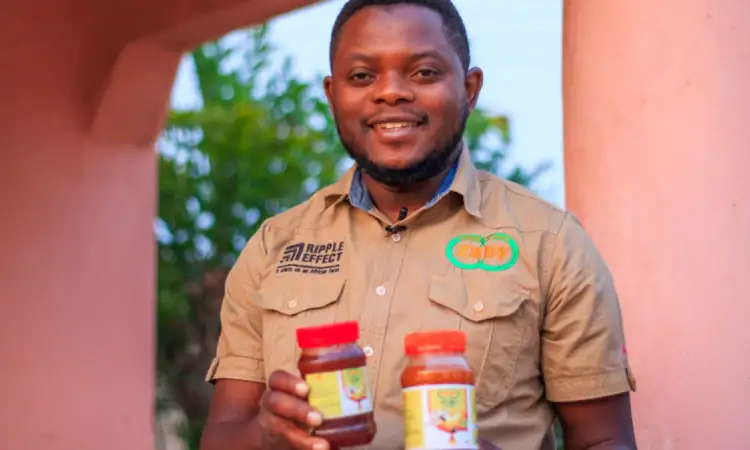
ZRDF also works closely with Ripple Effect, whose support in strengthening agroecological practices among smallholder farmers has helped reinforce the programme's focus on sustainable farming and conservation.
Together, these partnerships demonstrate that when communities are supported to protect natural resources while improving their livelihoods, both people and the environment can thrive.
Bee Together. For People. For the Planet.
World Bee Day reminds us that the systems sustaining life are built on connection and partnership.
From the miombo woodlands of central Zambia to the jar of honey on a family's table, every step depends on collaboration: between people and nature, communities and organisations, traditional knowledge and modern approaches.
As we celebrate the vital role of bees, we are also reminded of the importance of protecting the ecosystems they depend on and supporting the communities that care for them. When people, trees and bees thrive together, the benefits extend far beyond a single harvest - creating stronger livelihoods, healthier environments and more resilient communities for generations to come.
Learn more about our work in Zambia
This beekeeping and agroforestry initiative is one example of how communities in Zambia are building sustainable livelihoods while protecting the natural resources they depend on.
Discover more about Ripple Effect's work alongside farming communities across Zambia.
How you can support this work
Whether it’s sharing our work, making a donation, or exploring partnership opportunities, every action helps strengthen livelihoods and support more resilient communities.

Want to hear good news stories from Africa, get involved in fantastic fundraising and be part of exciting events? Fill out your details below and we will keep you updated by email.