

The power of philanthropy: a donor’s perspective on making a difference
Approx. 6 min read
By Laura Ashford, Philanthropy Lead at Ripple Effect
At Ripple Effect, we believe that lasting change begins with people who care. Sunday 15 November is National Philanthropy Day, and we want to take a moment to recognise and thank all the donors who make our work possible. Every gift we receive is much more than a donation; it is an investment in people and a future where families in rural Africa can flourish.
We asked long-standing supporter and former board member, John Geake, about his commitment to Ripple Effect and what philanthropy means to him.
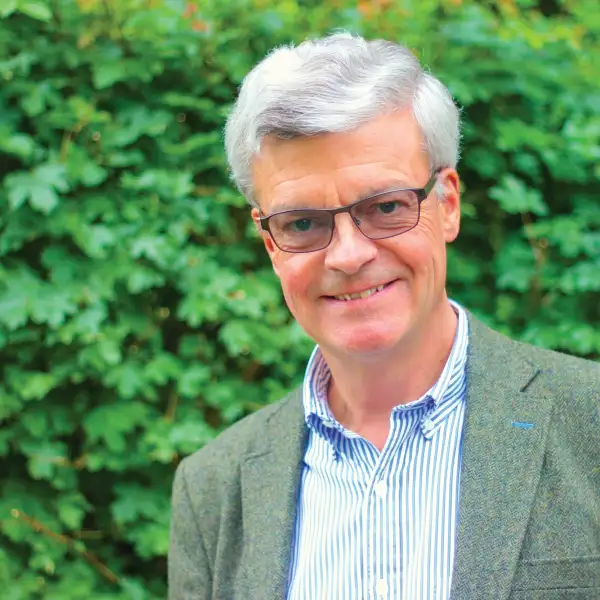
- John Geake, Ripple Effect supporter and former board member
John’s love of Africa began at the age of 17, when he taught in Kenya and travelled widely across the continent. So, when he became involved with the charity in 1999, John already understood the landscape of the countries in which Ripple Effect operates.
“I got involved through my brother Martin, when he became General Manager of the then tiny Send a Cow. He asked me to give what support I could, and I've been a donor ever since.”
After John retired from his career in finance, he joined Send a Cow’s board, becoming Chair in 2015. John was a trustee for nine years; under his steady leadership the organisation weathered the impact of Covid-19, rebranded from Send A Cow to Ripple Effect and income grew by 30%.
In 2013, John increased his financial support to fund a pilot project in a country that was new territory for Ripple Effect. John explained:
“I got involved with Burundi because my brother said ‘it’s one of the poorest countries in the world, in desperate need of the sorts of skills that Send a Cow teaches. And I'd like to start a pilot project there. Will you consider funding it?’ So I did.”
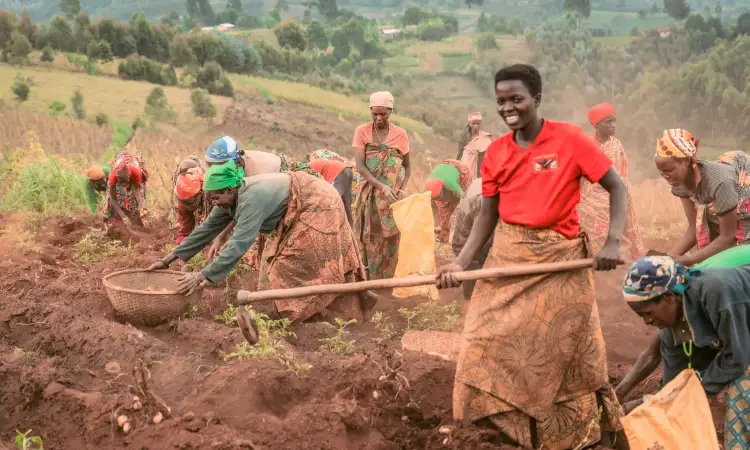
Burundi is a country rich in resilience but steeped in poverty, with over 75% of Burundians lacking access to food, healthcare and decent living conditions. The initial pilot supported just 63 families, offering training in agriculture and livestock management, taking learnings from neighbouring Rwanda. Within a year, all participants grew fruit and vegetables and produced enough to sell to neighbours.
The success of that pilot project helped Ripple Effect scale its programme delivery and impact in Burundi. Over the last 13 years, Ripple Effect has transformed the lives of more than 50,000 Burundian families delivering significant improvements in livelihoods by tackling communities’ challenges including food and income security, gender inequalities and youth unemployment, while strengthening resilience to climate change.
Philanthropy is about belief in the potential of others and creating opportunities that can transform lives for generations to come. It’s this lasting change that John finds encouraging:
“Rural development in Africa is a long-term thing - it's not just in and out. [Ripple Effect does] go in and out for specific projects, yes, but it cumulates over a long period in terms of building up the staff, resources, the training, the peer farmers, but also in terms of making a real difference in particular regions. And obviously it does ripple out into neighbouring communities. We don't even see half of that.”
Ripple Effect’s mission has three core pillars; sustainable agriculture, gender and social equality, and enterprise development. The three are intrinsically linked and progress in one area strengthens the others. When asked if there is a particular element of Ripple Effect’s work that matters most to him, John spoke about a moment that inspired him:
“In 2018, we went to Burundi to visit a few farms in the hills. We visited the most impressive lady, a small entrepreneur. And she said, I want you to come and see my tomato field. I'm no expert on tomatoes - they looked okay to me. But the point was the economics of it. She knew when she was going to be able to take crop from the patch and what quantities. She knew how many baskets a day she was going to harvest. She knew what price she'd get in the market. And she was clear on the economics of her business, her revenue and her costs. As a businessman, I found that extremely exciting, to see how many participants so quickly move beyond basic subsistence farming.”
It’s John’s deep appreciation of the challenges faced by many smallholder farmers, who don’t lack ambition but lack access to affordable finance, that has led him to become a Seed & Scale donor.
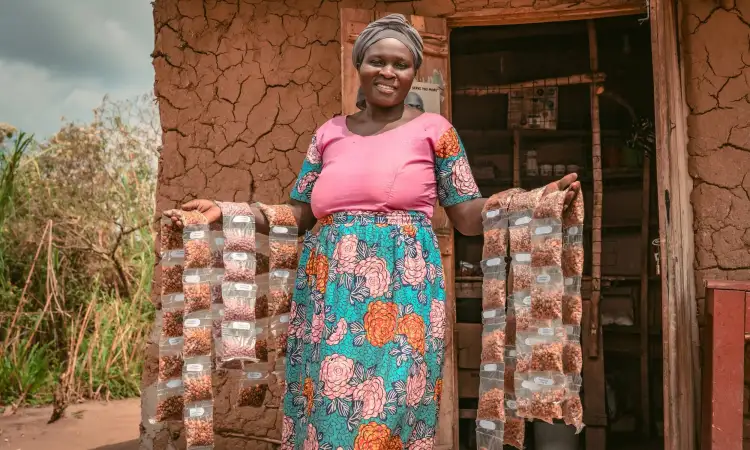
Seed & Scale is one of three new thematic funds, launched to enable supporters to channel their donations to a specific area of Ripple Effect’s work, whilst allowing the organisation to have the flexibility to respond to climate shocks, rising costs, and a competitive funding landscape. A gift to Seed & Scale supports farmers to turn their harvests into sustainable enterprises and access the markets and finance they need.
John has seen firsthand how a small contribution can be catalytic, unlocking something much bigger:
“It’s astonishing how entrepreneurial [the farmers] are. With a little bit of help to get started, they will do things that they’ve never dreamt of.”
Relationships between charities and their supporters are built on trust. Following his experience as both a trustee and a supporter, John has confidence in Ripple Effect’s commitment to managing donations responsibly:
“Ripple Effect have always been good at using a little money rather well. It's not wasted and it does get through to where it needs to get to. And it does achieve things, even if the amounts are not huge.”
It’s this confidence in Ripple Effect, along with his personal values and Christian faith, that inspire John’s continued generosity. He explains philanthropy is not simply about giving what you can afford, but recognising the responsibility we all have to make a difference:
“We're awfully good at getting on with our own boring everyday lives and not giving very much thought to anyone else… You've got to get out there and do something, within the limits of what you can do.”
Philanthropy is a collaborative effort, bringing together funders, charities and the communities they work alongside, united by a shared vision of a better world. It’s a shared sense of hope which turns generosity into action, possibility into progress, and the ambition for a better future into transformation. John says:
“[Ripple Effect project participants] are mostly women. And the big thing that Ripple Effect brings is the idea that “I can do something”. Actually, somebody's taking notice of me. Somebody wants my ideas. And that's powerful. Hope leads to belief, which leads to initiative, which leads to freedom from penury, and freedom from being unable to think, unable to do. Hope, belief, initiative and freedom. That's what I like to think that my [donations] over the years have contributed to.”
John lives in Austria with his wife Antoinette, and despite having stepped down from the board, his commitment to Ripple Effect is unwavering.
This National Philanthropy Day, we want to say a heartfelt thank you to John, and everyone who supports Ripple Effect’s work and believes in our mission.
How you can support our work
Talk to us today to find out about how you can make a difference. Email the Philanthropy & Partnerships team: partnerships@rippleeffect.org

Want to hear good news stories from Africa, get involved in fantastic fundraising and be part of exciting events? Fill out your details below and we will keep you updated by email.